How We Selected These Shopify Home Decor Stores
This is not a ranking based on revenue, traffic, or visual design alone. Every store needed to demonstrate at least one ecommerce idea worth studying. We looked for tactics that address the specific friction of buying home products online, including scale, texture, fit, variants, customization, shipping, product discovery, and multi-item merchandising. We also intentionally mixed different business models. A furniture brand should not copy a wall-art store line for line, and a curated marketplace should not use the same merchandising logic as a hero-product cookware brand. The useful question is not which store looks best. It is which tactic fits your catalog and customer decision. Storefronts and merchandising patterns were reviewed in 2026. Promotions, layouts, and individual features may change over time.Best Shopify Home Decor Stores at a Glance
| # | Store | What to study | Primary business effect |
|---|---|---|---|
| 1 | McGee & Co. | Turn room inspiration into a shopping path | Discovery + cross-sell |
| 2 | Ruggable | Demonstrate the product advantage visually | Conversion + confidence |
| 3 | Brooklinen | Simplify a technical category with guided sets | AOV + conversion |
| 4 | Burrow | Make configuration feel manageable | Conversion + product fit |
| 5 | Lulu and Georgia | Organize a large catalog around style and room intent | Discovery + premium positioning |
| 6 | The Citizenry | Use provenance as part of the product value | Trust + perceived value |
| 7 | The Sill | Turn education into product discovery | Conversion + lower uncertainty |
| 8 | Schoolhouse | Structure complex variants clearly | Conversion + usability |
| 9 | Revival Rugs | Make size, texture, and style easier to compare | Discovery + conversion |
| 10 | Inside Weather | Make complex furniture customization visual | Conversion + product fit |
| 11 | Parachute | Sell a complete lifestyle without making the store feel busy | Brand value + AOV |
| 12 | Jonathan Adler | Make a strong aesthetic easy to shop | Brand differentiation + discovery |
| 13 | Olive Ateliers | Match the storefront to one-of-a-kind inventory | Urgency + brand experience |
| 14 | Our Place | Expand from a hero product without losing clarity | AOV + catalog expansion |
| 15 | Caraway | Make color a controlled part of variant selection | Conversion + AOV |
| 16 | Framebridge | Guide shoppers through personalization step by step | Conversion + customization |
| 17 | Venus et Fleur | Guide premium gifting without losing the luxury feel | Conversion + AOV |
| 18 | Pura | Explain an unfamiliar product in a short visual sequence | Conversion + education |
| 19 | MirrorMate | Turn measurement and customization into a guided flow | Conversion + confidence |
| 20 | Industry West | Balance large imagery with a clear homepage hierarchy | Performance + discovery |
| 21 | Fyrn | Make longevity part of the sales proposition | Trust + premium value |
| 22 | HORNE | Use curation as a service | Trust + discovery |
| 23 | Shoppe Amber Interiors | Connect editorial inspiration to commerce | Brand desire + cross-sell |
| 24 | Leesa | Support a high-consideration purchase with trust | Conversion + brand equity |
| 25 | Goodee | Make values-led curation useful at catalog scale | Discovery + trust |
Best Shopify Home Decor Stores by What You Want to Improve
You do not need to copy an entire storefront to learn from it. Start with the part of your own customer journey that needs the most improvement, then study the stores that solve that specific problem well.
| If you want to improve... | Stores to study | What to look for |
|---|---|---|
| Room-based merchandising | McGee & Co., Shoppe Amber Interiors, Lulu and Georgia | How styled rooms connect inspiration to individual products and coordinated purchases. |
| Large-catalog discovery | Lulu and Georgia, HORNE, Goodee | Collection logic, filters, style-led navigation, and editorial curation. |
| Product education | Ruggable, The Sill, Pura | How unfamiliar features, care requirements, or product advantages are explained visually. |
| High-consideration conversion | Inside Weather, Leesa, Fyrn | Dimensions, delivery reassurance, product proof, longevity, and trust-building information. |
| Variants and configuration | Burrow, Schoolhouse, Caraway | How size, finish, fabric, color, and configuration choices are kept understandable. |
| Customization | Framebridge, Inside Weather, MirrorMate | Step-by-step configuration, previews, and guidance that reduce decision fatigue. |
| Bundles and coordinated sets | Brooklinen, Our Place, Caraway | How several products are presented as one useful outcome rather than unrelated upsells. |
| One-of-a-kind or values-led products | Olive Ateliers, The Citizenry, Goodee | How scarcity, provenance, materials, craftsmanship, and sustainability support perceived value. |
25 Shopify Home Decor Store Examples and What to Learn From Them
1. McGee & Co.
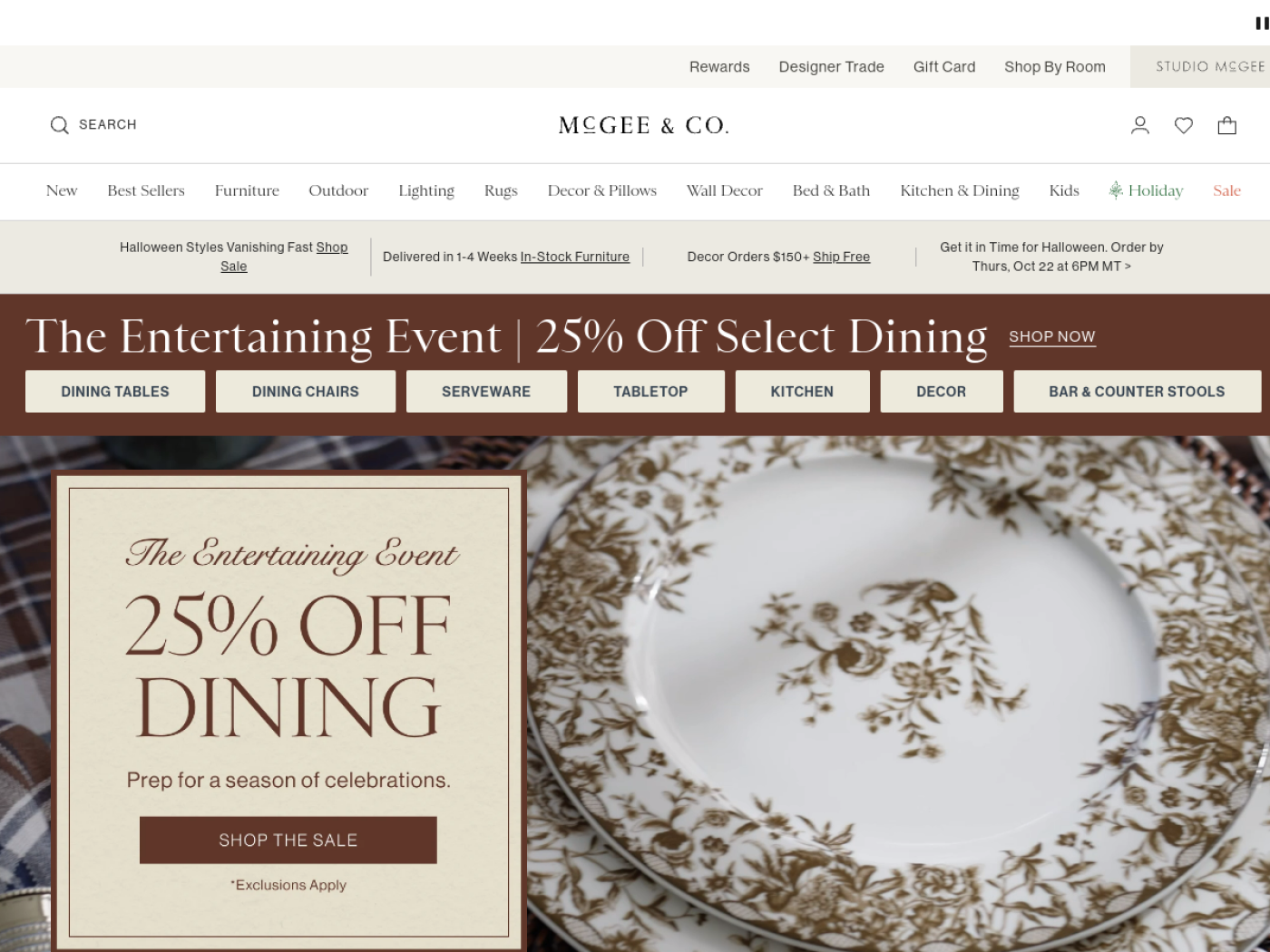
McGee & Co. treats room photography as merchandising, not decoration. The store presents products inside complete interiors, then gives shoppers clear ways to move from the room they like to the individual pieces that create it.
That matters in home decor because many shoppers do not begin with a SKU in mind. They begin with a look. A room-first journey helps translate vague inspiration into specific products without forcing the customer to search across unrelated categories.
2. Ruggable
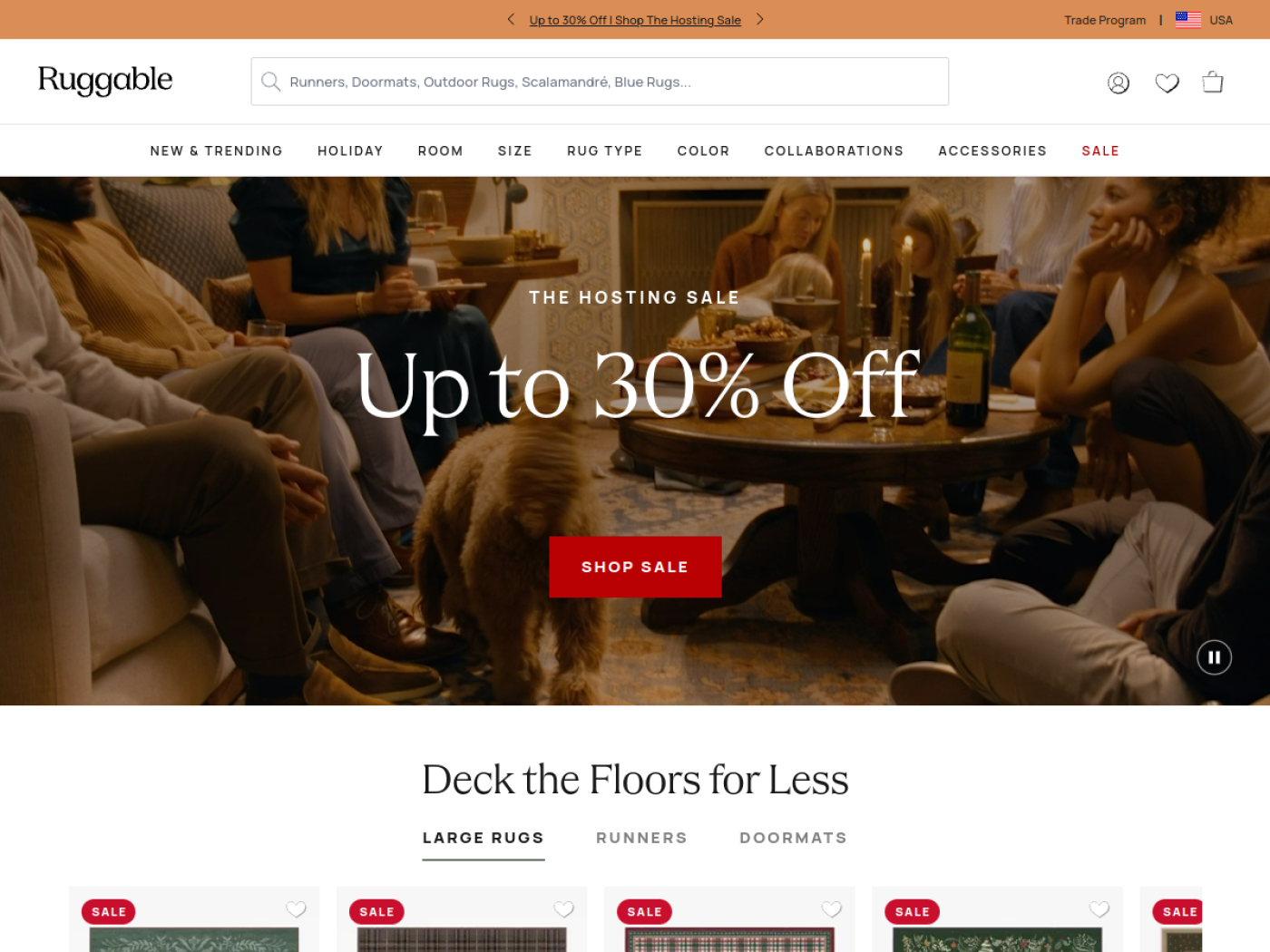
Ruggable has a product concept that needs explanation: the rug is not only decorative, it is designed around washability and everyday use. The storefront repeatedly demonstrates that functional difference through visual education, seasonal room imagery, and clear paths into sizes and styles.
The lesson is broader than rugs. If a home product has a practical advantage that is difficult to understand from a static product title, the storefront should show the mechanism, use case, or benefit as early as possible.
3. Brooklinen
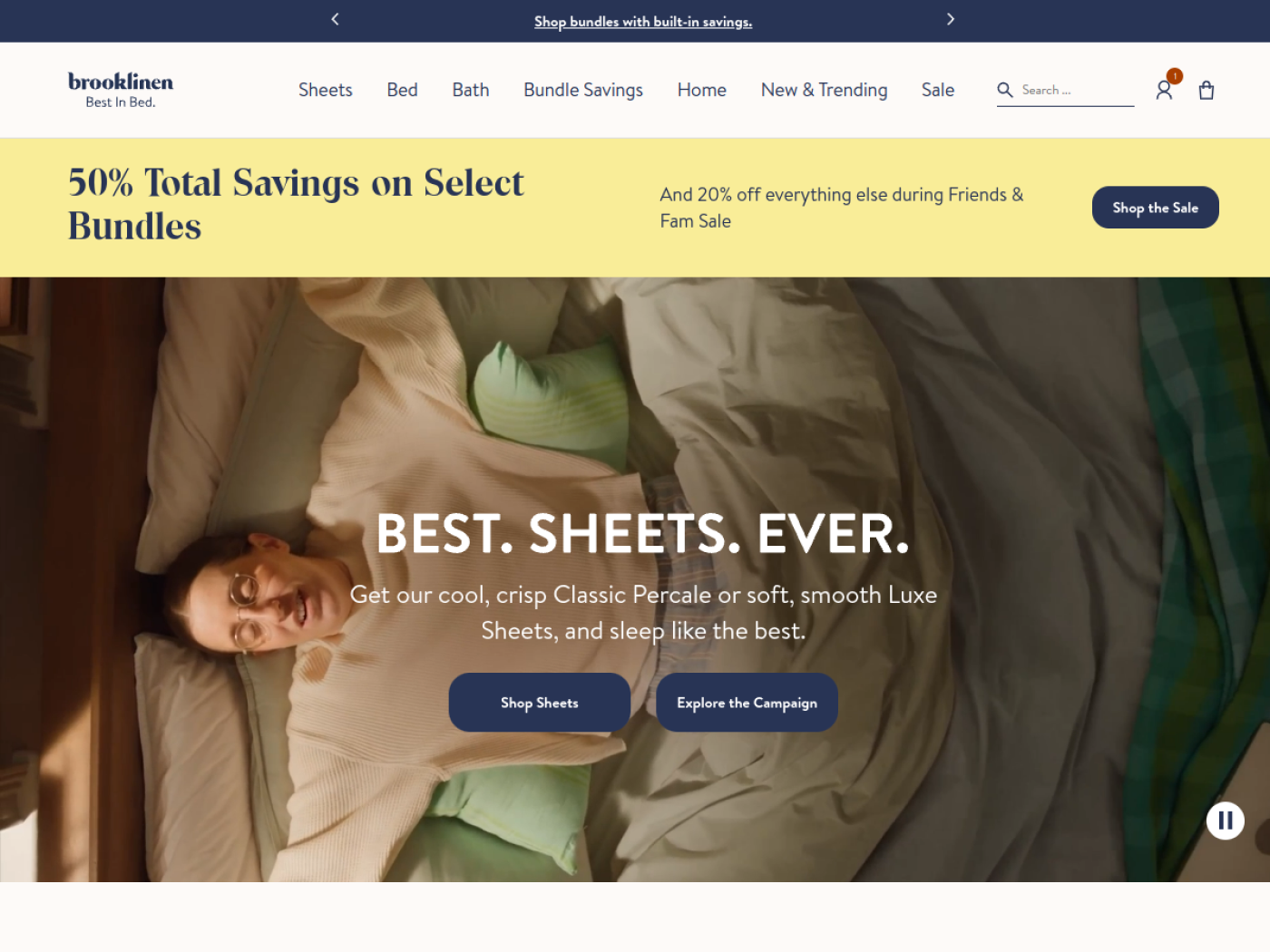
Bedding becomes complicated quickly. Shoppers have to compare materials, weave, feel, temperature, sizes, and the number of pieces they actually need. Brooklinen reduces that complexity with guided product education and ready-made combinations instead of expecting every customer to build a bedding setup from scratch.
This is a strong example of bundling as decision support. The set is useful because the products naturally belong together, and the customer can understand the complete outcome more easily than when each item is merchandised in isolation.
4. Burrow
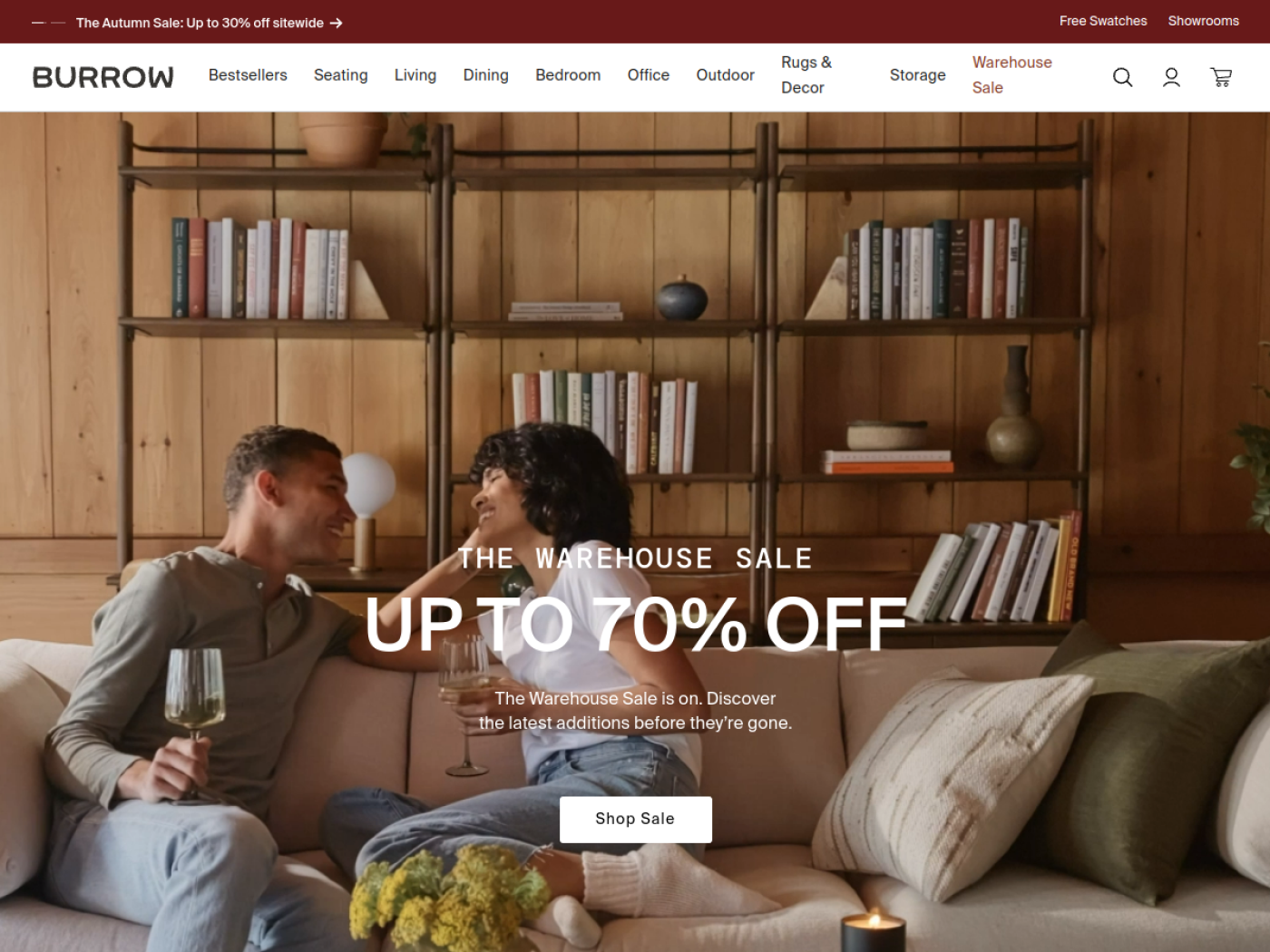
Burrow sells products with multiple decisions attached to them: size, configuration, fabric, color, and how the furniture will fit into a real space. Its ecommerce experience makes modularity part of the selling proposition rather than allowing it to become a source of complexity.
For configurable home products, the best interface does not expose every option at once. It helps the shopper understand the base product first, then moves through choices in a logical order while keeping the visual result understandable.
5. Lulu and Georgia
Lulu and Georgia combines a broad assortment with an editorial presentation. Shoppers can approach the catalog through conventional product categories, but the experience also supports browsing by room, collection, style, and visual inspiration.
That matters because home decor customers often know the atmosphere they want before they know the exact product name. A large catalog should support both shopping modes: direct search for a known item and exploratory browsing for a look.
6. The Citizenry
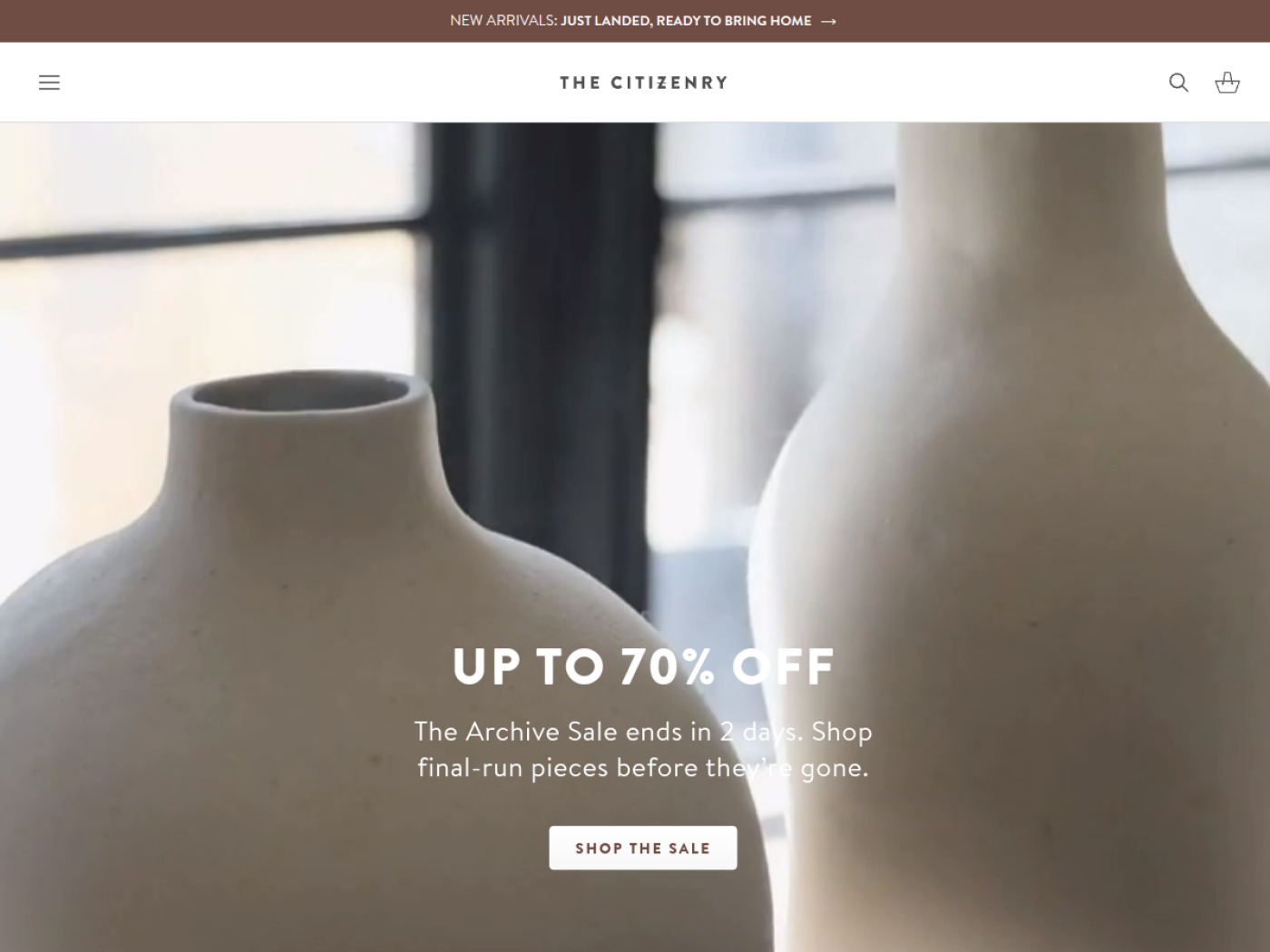
The Citizenry gives sourcing and craftsmanship a visible role in the shopping experience. Instead of treating the maker story as a separate About page, the brand connects materials, origin, and artisan context to the products themselves.
This is especially useful for premium decor because two visually similar objects can have very different perceived value. Provenance gives the shopper a reason to understand why a product costs more and why it is different from a mass-market alternative.
7. The Sill
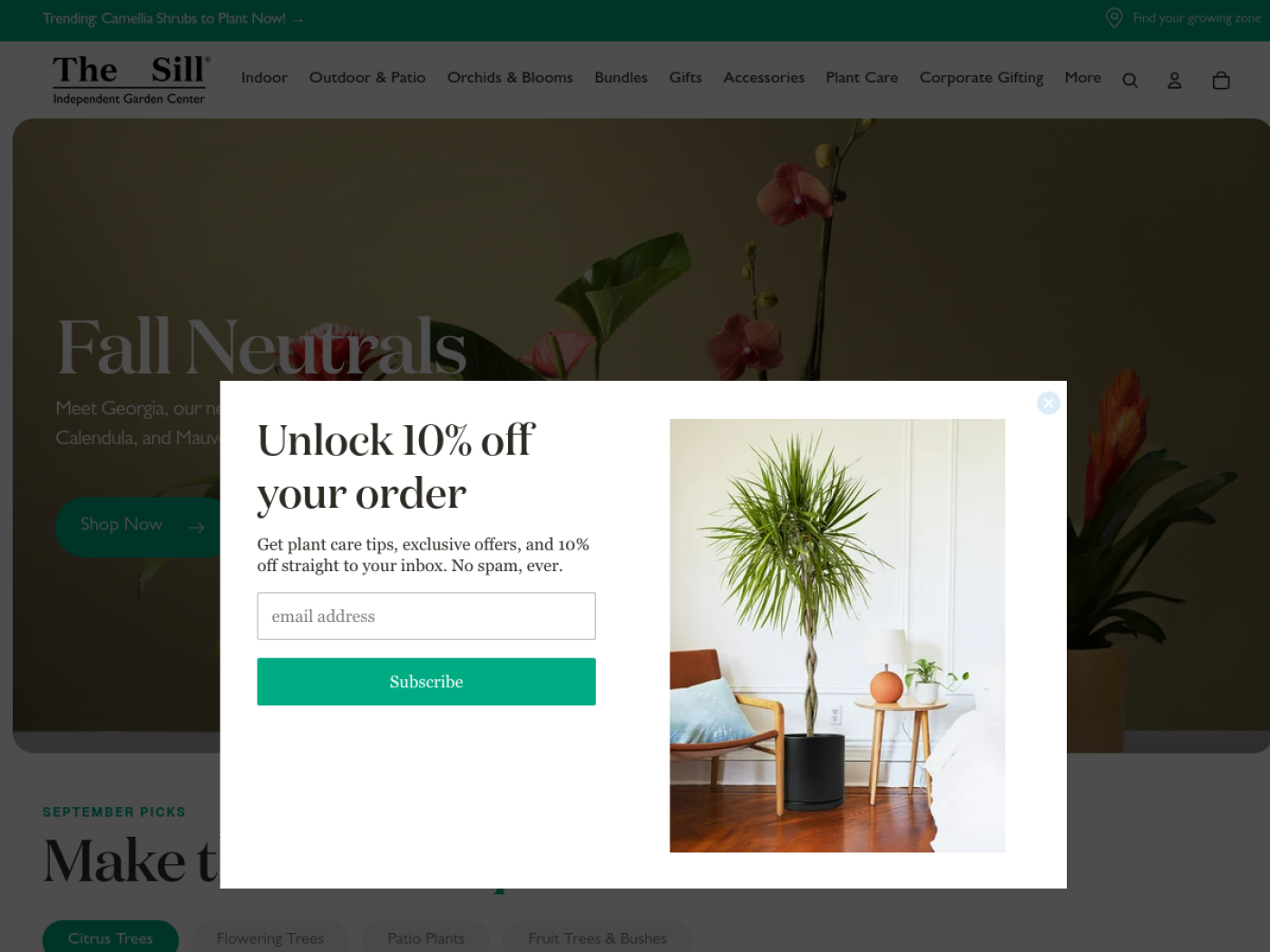
The Sill sells products that require care knowledge, so education is part of conversion. Instead of burying plant requirements in long descriptions, the shopping experience surfaces practical signals such as light needs, difficulty, and suitability for different homes.
The broader lesson is that product education works best when it also functions as navigation. If customers repeatedly ask the same question before buying, that question can become a filter, badge, or collection.
8. Schoolhouse
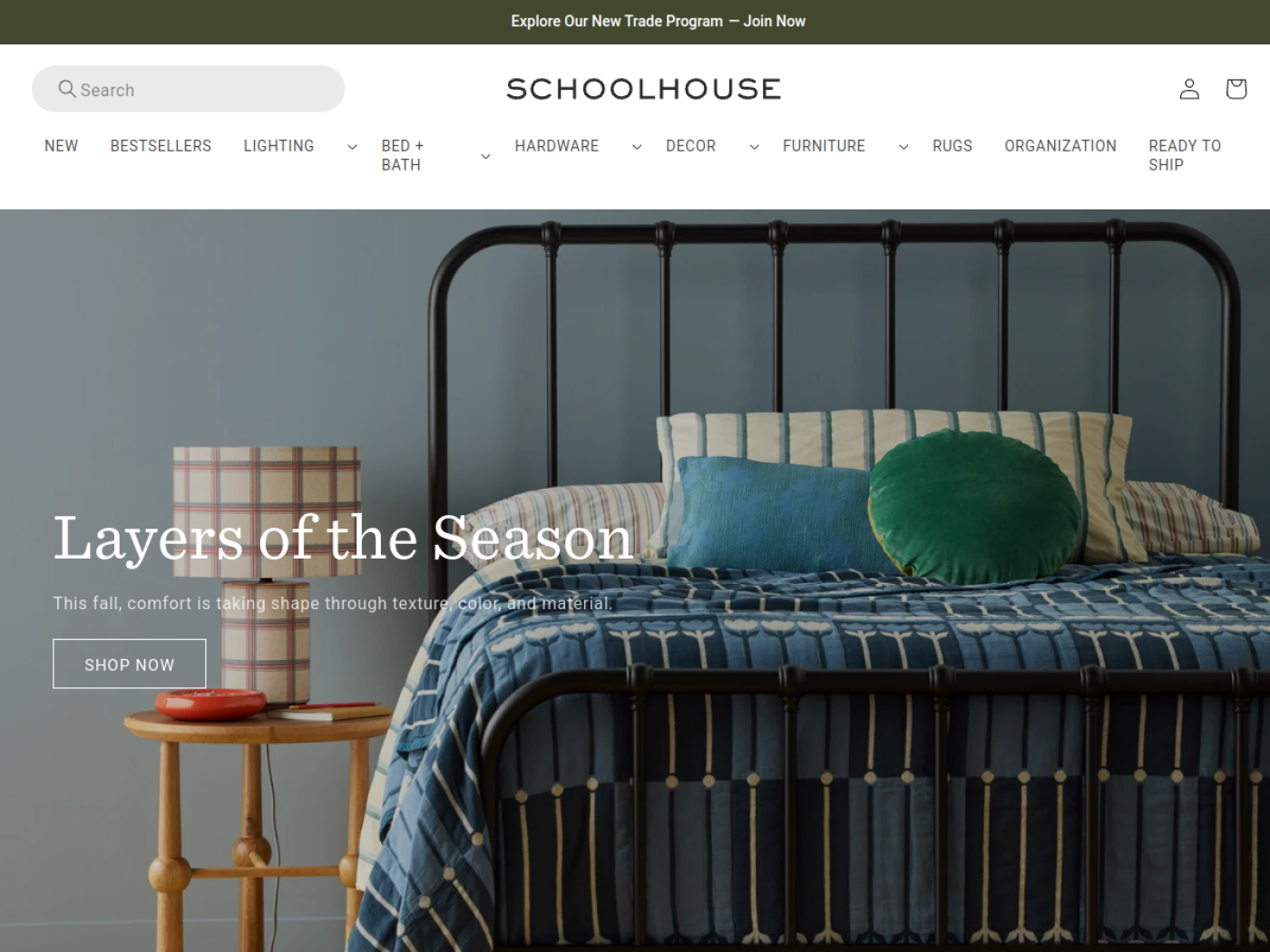
Lighting and hardware can create difficult product pages because finishes, dimensions, shades, cords, bulbs, and installation details all affect the final purchase. Schoolhouse shows how a design-led brand can keep that complexity organized rather than hiding it.
Clear variant groups and media that respond to selections make comparison easier. For products where the wrong option can create a costly return, a calm, structured product page is more valuable than an ultra-minimal page that omits necessary information.
9. Revival Rugs
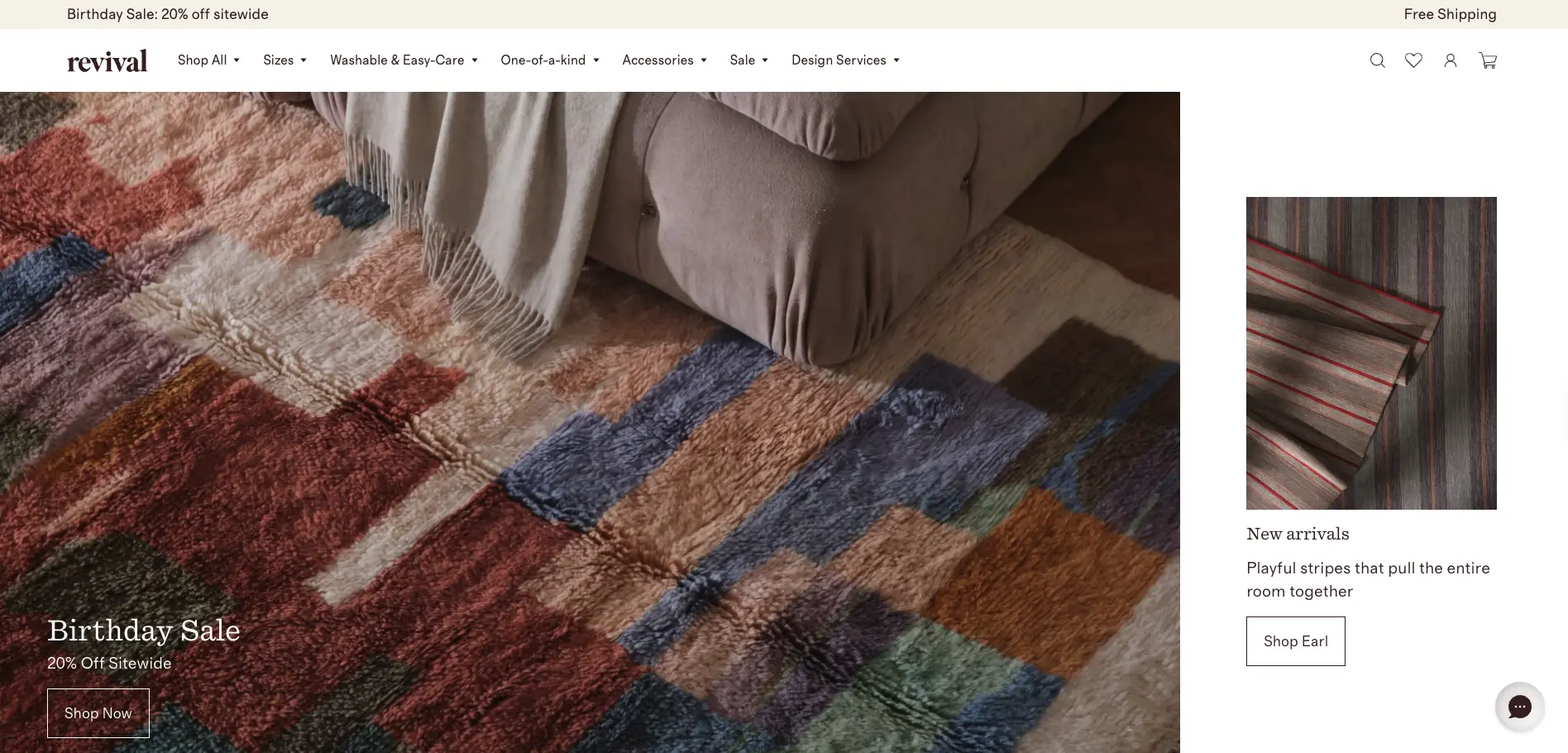
Rugs are difficult to sell online because the shopper has to judge color, texture, pile, material, and scale at the same time. Revival Rugs handles this with strong filtering and a mix of texture close-ups and room photography.
The important principle is that visual products still need structured data. Lifestyle photography creates desire, while dimensions, filters, and close-up imagery answer the practical questions that determine whether the product will work in a space.
10. Inside Weather
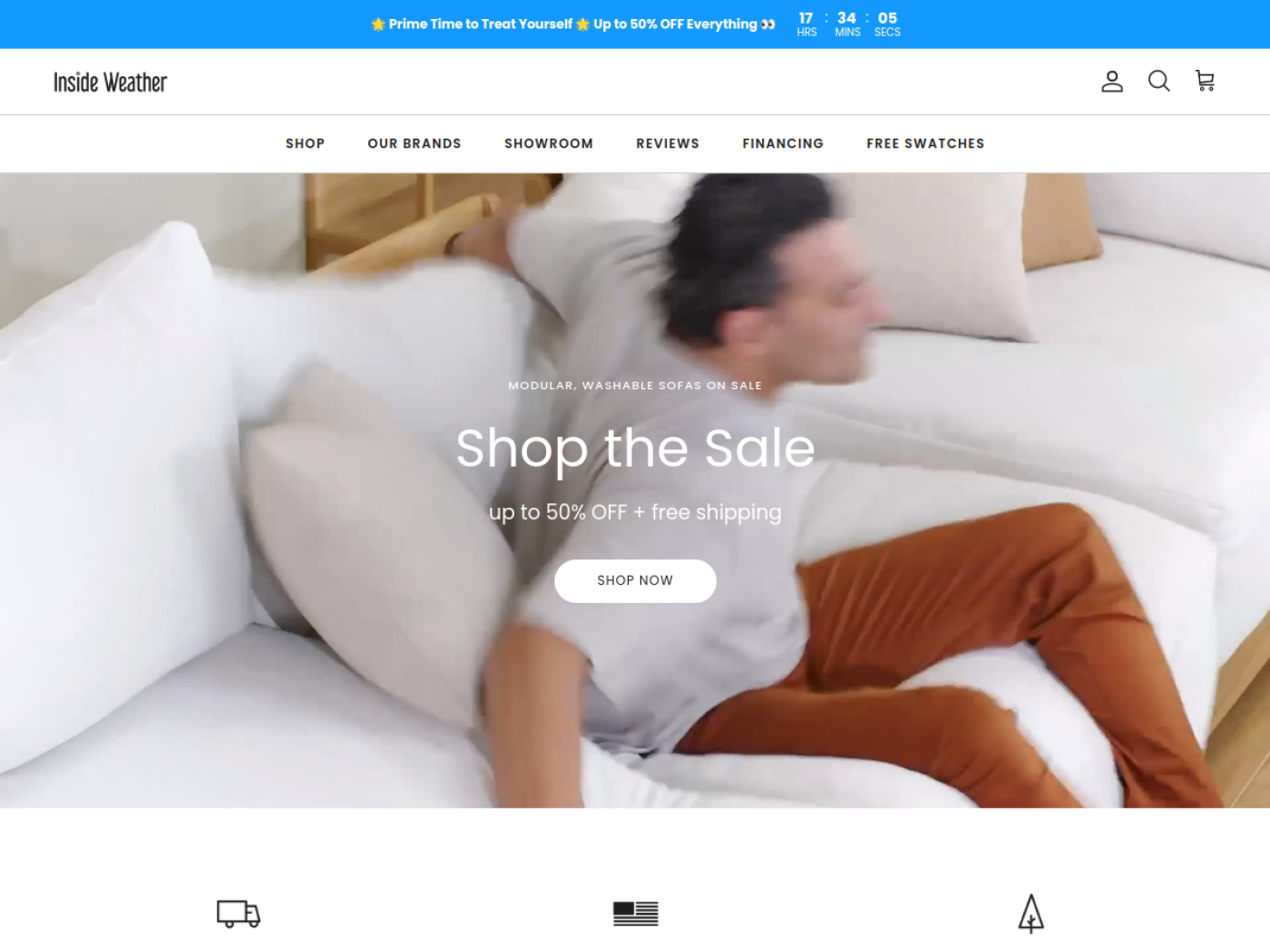
Inside Weather turns one of the hardest furniture problems into a guided shopping flow: configuration. A shopper can move through upholstery, layout, comfort, and other choices while the product remains visually understandable.
That matters because configurable furniture can easily overwhelm customers. Instead of exposing every decision at once, the experience keeps the shopper focused on building one coherent product and seeing how each choice changes the result.
11. Parachute

Parachute uses a restrained visual system to make bedding, bath, furniture, and decor feel like parts of the same home rather than separate catalogs. The photography communicates texture and atmosphere while the merchandising keeps the path into core categories clear.
This is a useful model for brands expanding beyond a hero category. The assortment can broaden without losing identity if every new category still fits the same visual and functional point of view.
12. Jonathan Adler
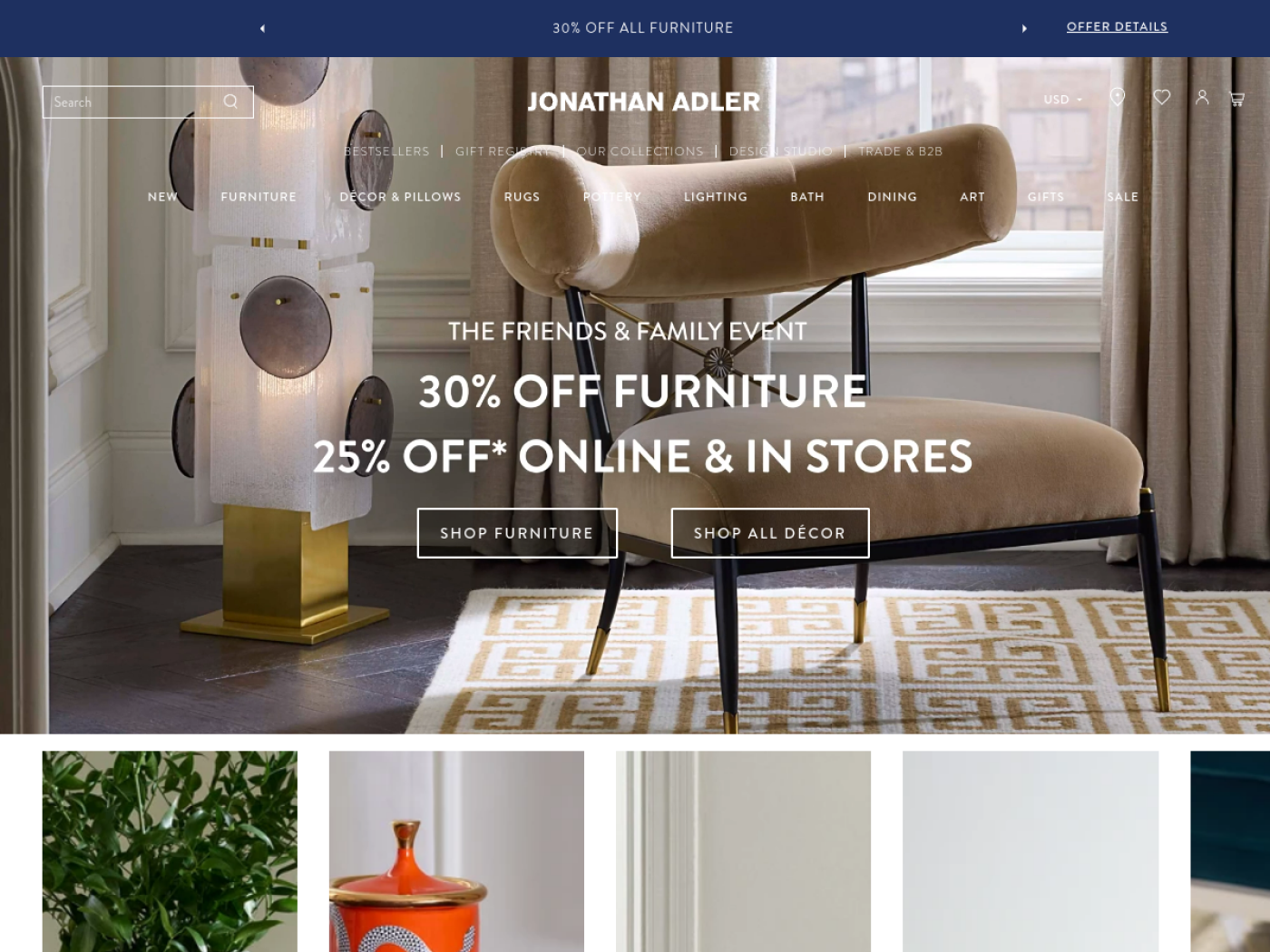
Jonathan Adler proves that a home decor store does not need to look neutral to feel premium. The site uses bold color, pattern, and collection-led merchandising while keeping category access clear across furniture, lighting, pottery, rugs, and accessories.
For brands with a recognizable visual point of view, dedicated collection pages can do more than organize inventory. They create a destination for a mood, launch, or campaign and give traffic a more relevant landing experience than a generic category page.
13. Olive Ateliers
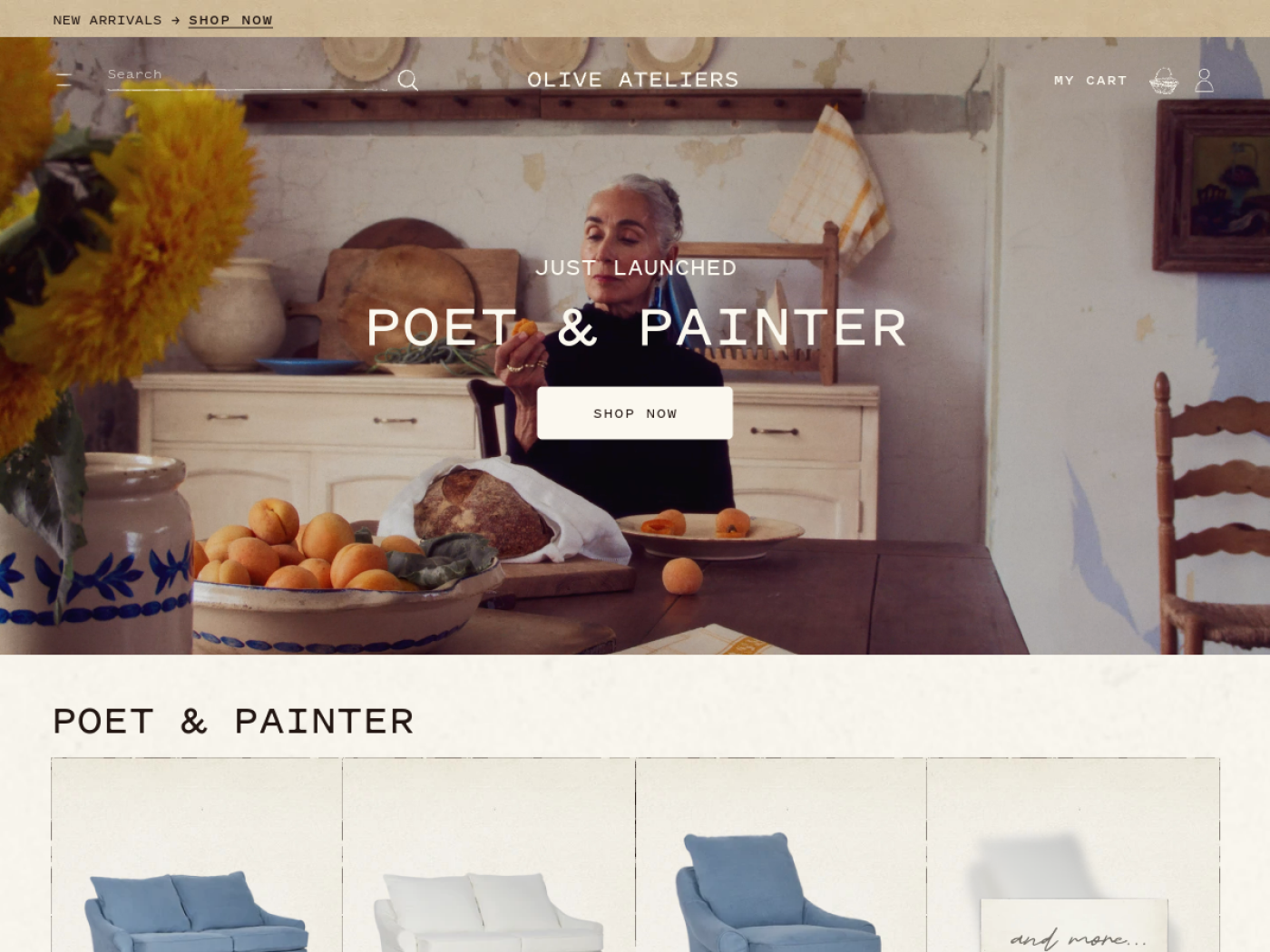
Olive Ateliers operates differently from a standard replenishable catalog. Many pieces are unique or limited, so the store uses a release-oriented approach that makes new inventory feel like a curated event rather than an endless product grid.
That model fits vintage and one-of-a-kind decor. Instead of relying on artificial urgency, the store can build anticipation around real availability and give more context to sourcing, material, and provenance.
14. Our Place
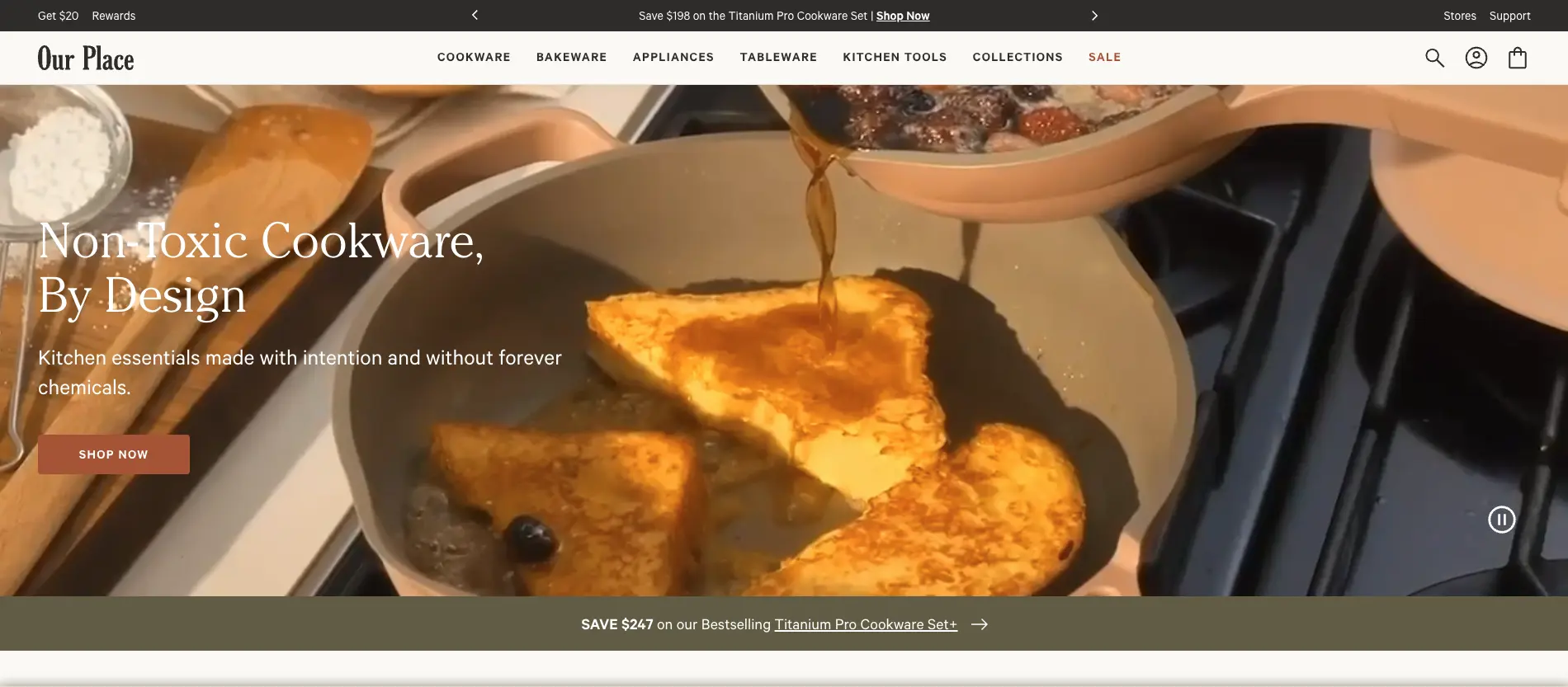
Our Place built strong recognition around a hero product, then expanded into adjacent cookware and tabletop categories without making the storefront feel like a generic kitchen catalog. Color, photography, and product families keep the assortment connected.
The sets are especially instructive. When several products share a visual system and are commonly used together, a ready-made combination can help customers buy the complete setup while preserving the simplicity that made the hero product successful.
15. Caraway
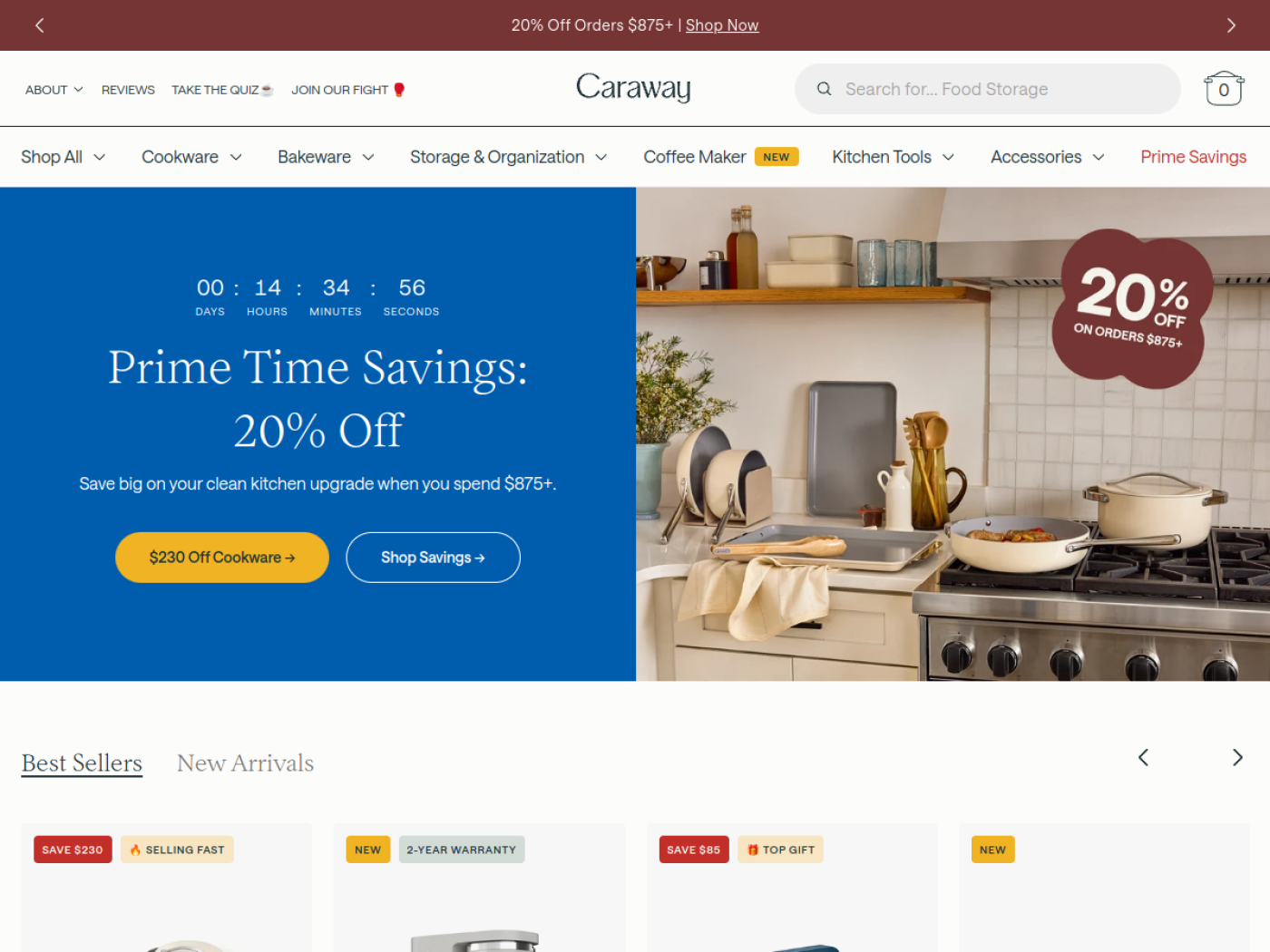
Caraway makes color a major part of product choice. Instead of treating color as a tiny swatch beside the Add to Cart button, the presentation gives each option enough visual support for shoppers to imagine it inside a kitchen.
That matters whenever finish or color meaningfully changes the product’s role in a room. Reactive imagery, consistent photography, and coordinated sets help customers compare options without losing sight of the overall collection.
16. Framebridge
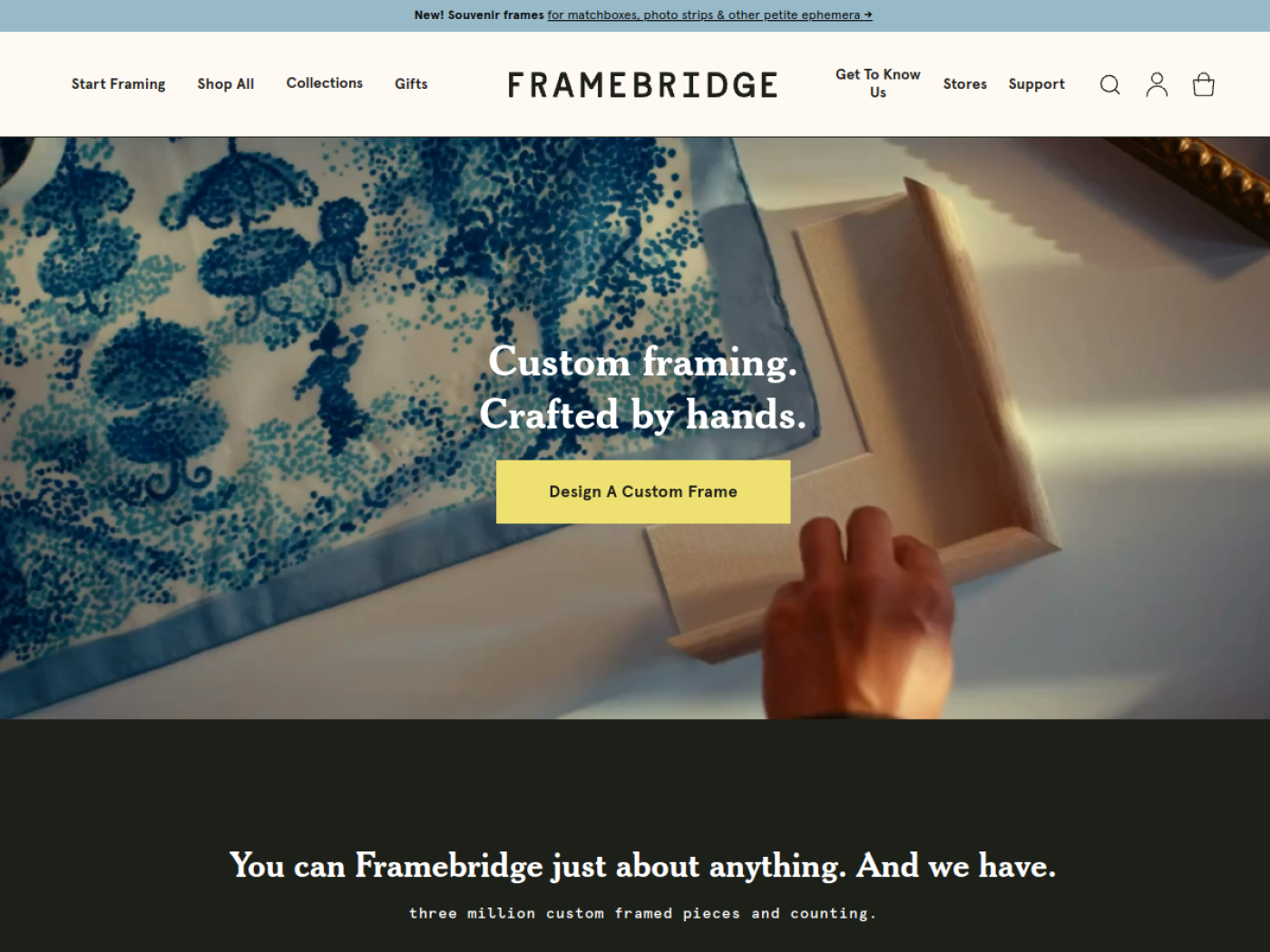
Framebridge sells a personalized outcome rather than a standard off-the-shelf object. The customer has to choose what to frame, how it should look, and which format fits the space. A guided flow turns that open-ended task into a sequence of manageable decisions.
This is the right model for any home decor product with meaningful customization. Instead of putting every control into one form, show progress, previews, and a clear next decision.
17. Venus et Fleur
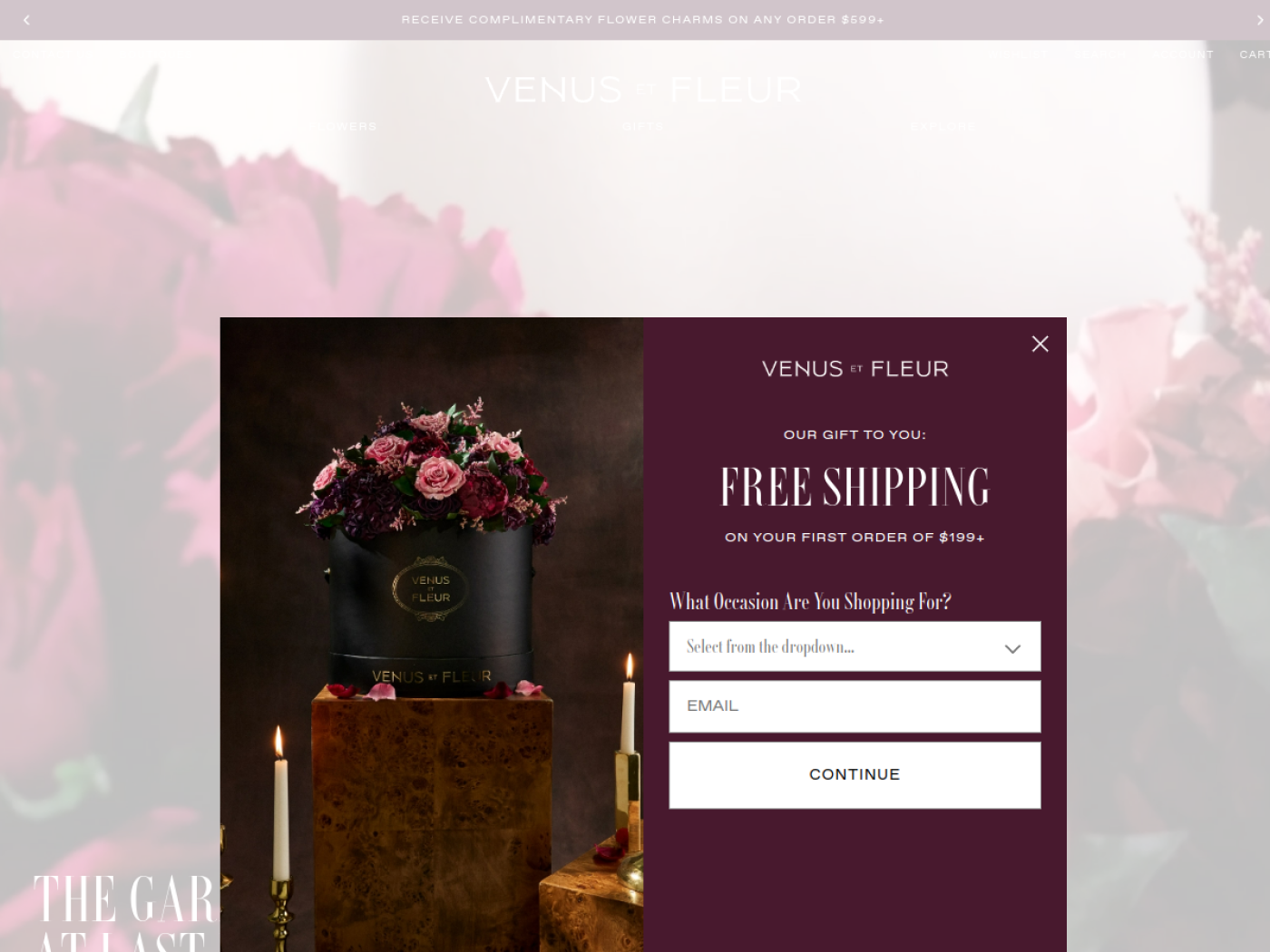
Venus et Fleur sells a premium product that sits between home decor and gifting. The merchandising challenge is not only to show the arrangement beautifully, but also to help shoppers choose the right size, color, occasion, and presentation without making the purchase feel transactional.
The store is useful to study because premium gifting benefits from guided choices and strong presentation. When the product is emotionally driven, the surrounding experience has to reinforce why the item feels appropriate for the recipient and the occasion.
18. Pura
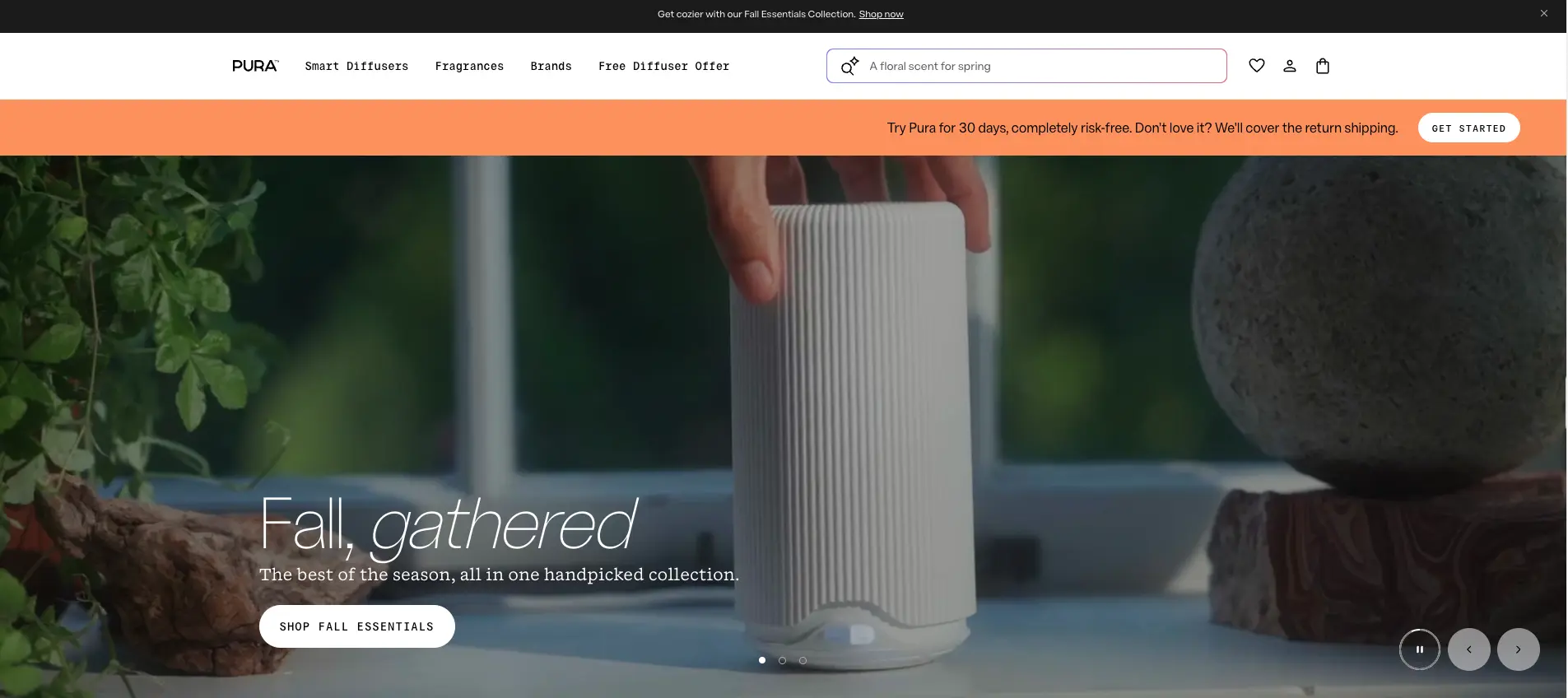
Pura combines home fragrance with connected hardware, which means first-time shoppers need to understand both what the product does and how the system works. The site breaks that explanation into short visual steps instead of relying on a long technical description.
For any home product that introduces a new behavior, education should follow the customer’s actual questions: What is it? How do I set it up? What do I choose next? What happens after purchase?
19. MirrorMate
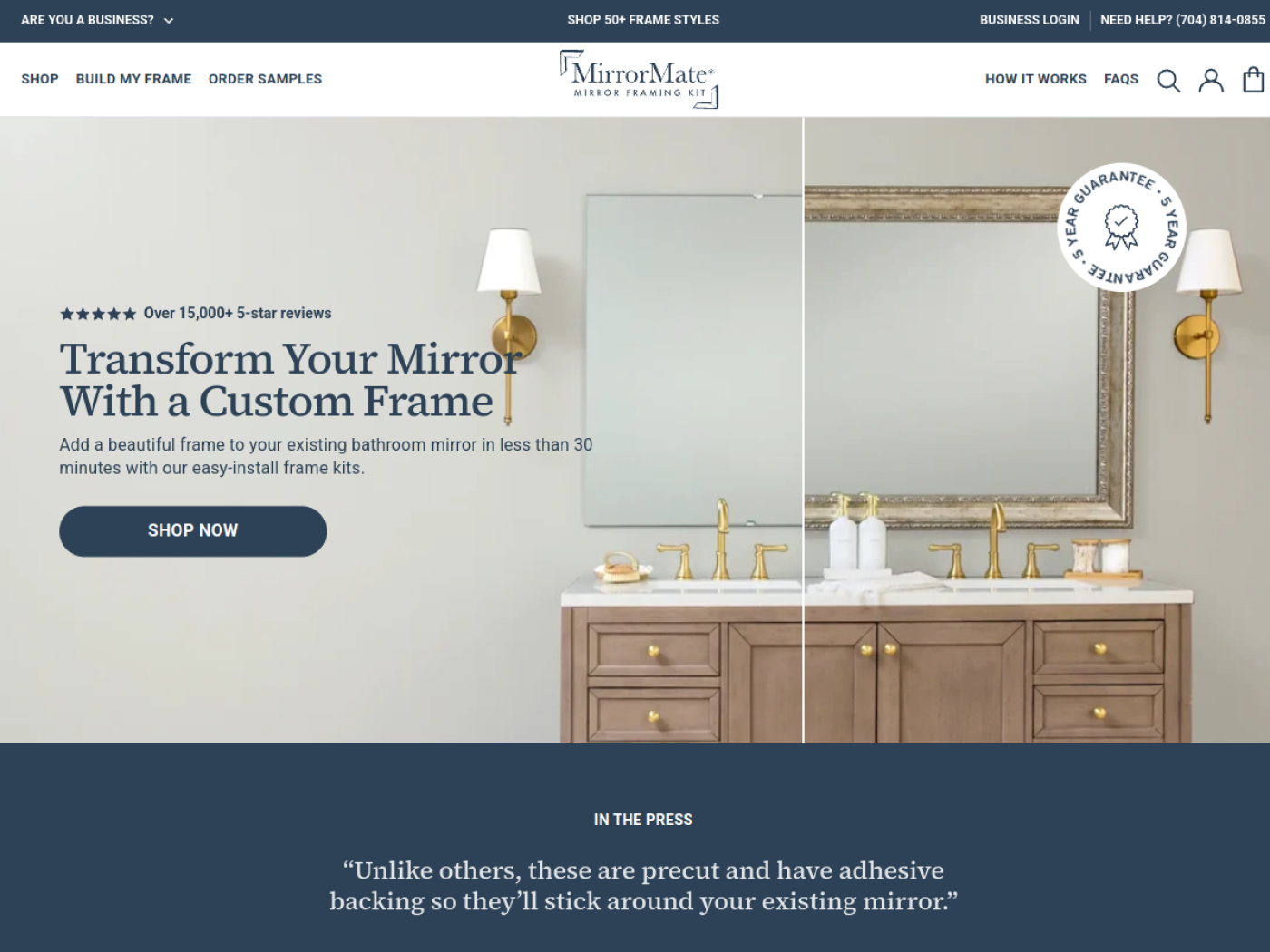
MirrorMate sells a product that depends on getting measurements and customization right. The storefront therefore has to do more than inspire. It has to guide shoppers through a process that would otherwise feel risky: choosing a frame style, measuring an existing mirror, and confirming the finished configuration.
This is a strong model for any home decor product where the wrong size or specification can kill conversion. Guidance, samples, and structured customization turn a technical purchase into a manageable sequence of decisions.
20. Industry West
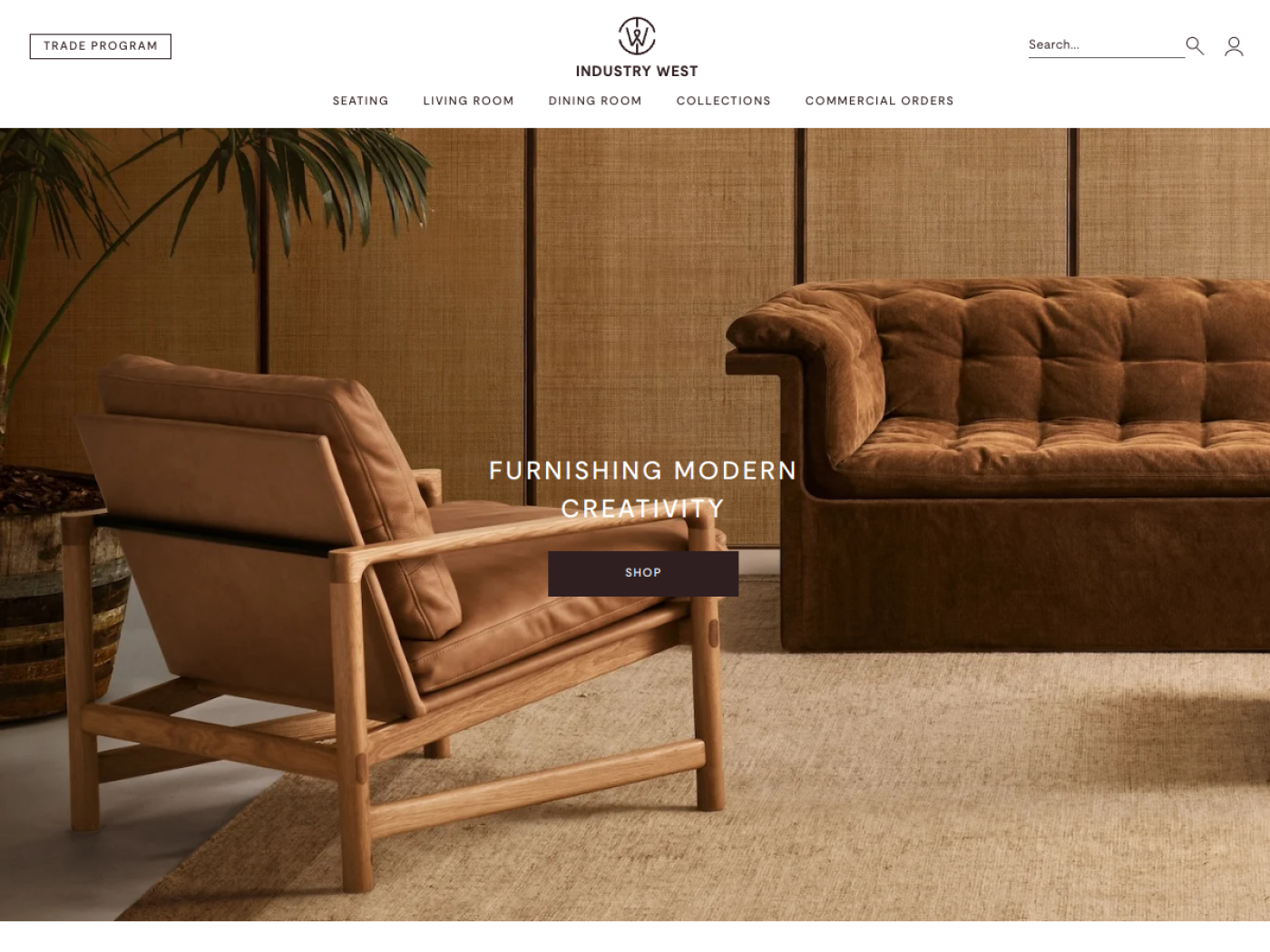
Industry West relies on large environmental photography because scale and material are central to the furniture purchase. The useful part is how that imagery is organized into a clear sequence rather than becoming one long visual mood board.
For image-heavy home stores, page hierarchy matters as much as compression. A visitor should understand the value proposition, reach important categories quickly, and see product or trust signals without waiting for every decorative asset to load first.
21. Fyrn
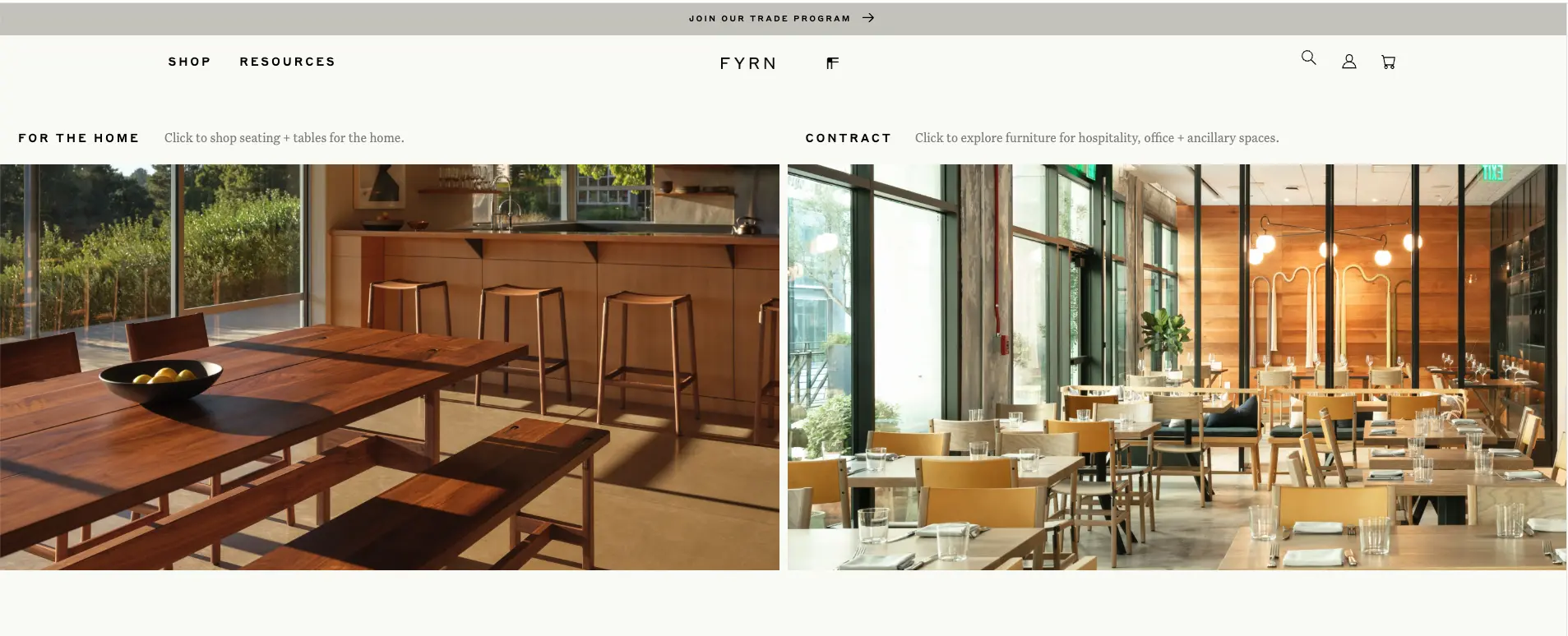
Fyrn makes durability and repairability visible parts of the product story. Replacement components and a long-term ownership mindset give customers a concrete reason to see the furniture as an investment rather than another disposable decor purchase.
Sustainability claims are more persuasive when they are connected to observable product behavior. Repairability, replaceable parts, material specifications, and care guidance are stronger proof than broad environmental language alone.
22. HORNE
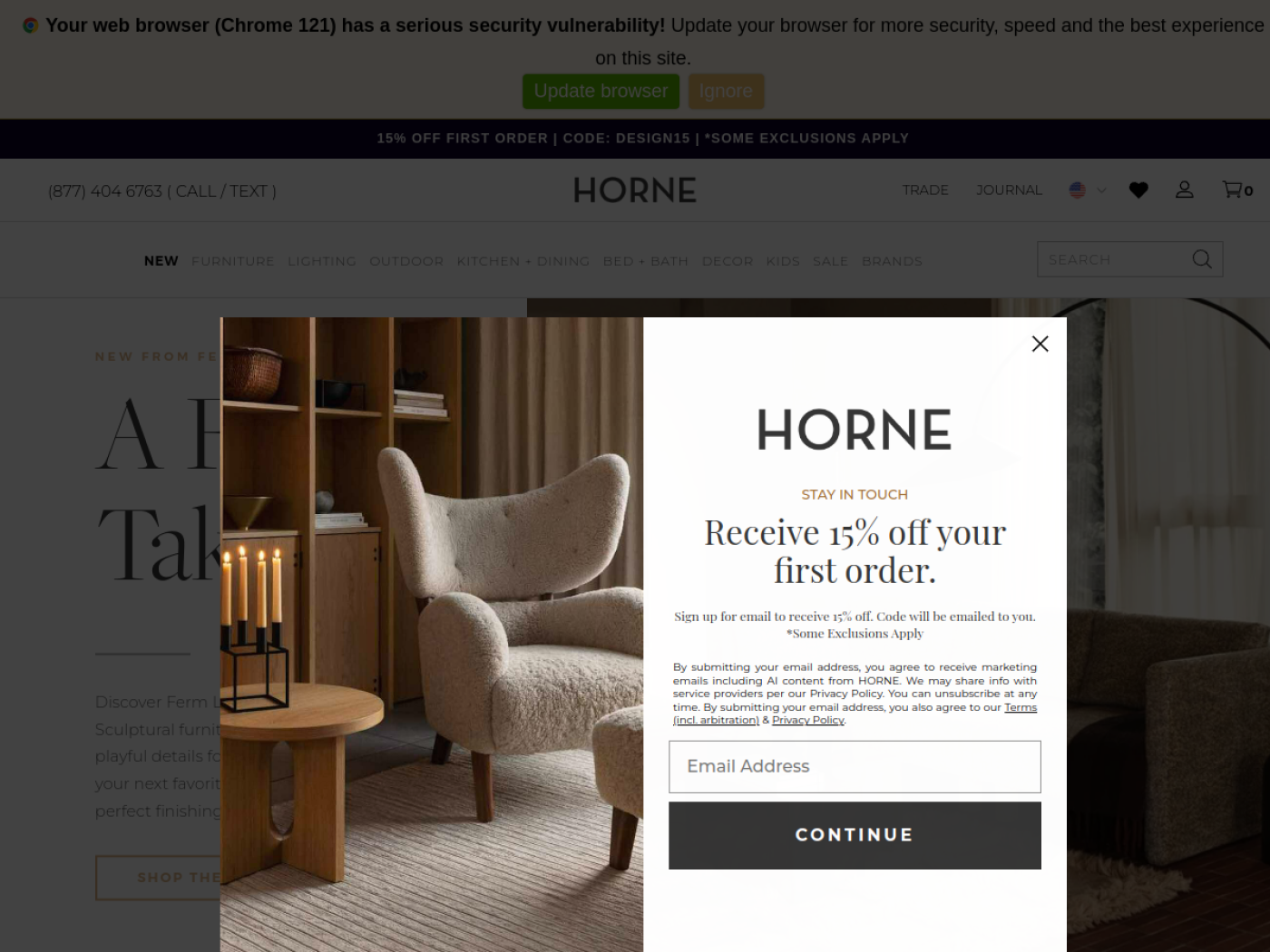
HORNE operates more like a design curator than a single-product brand. That changes the ecommerce job. The store has to help customers trust the selection itself and navigate across multiple designers, materials, and categories without feeling like they are browsing an undifferentiated marketplace.
For multi-brand home stores, curation can be the core value proposition. Strong collection logic, consistent photography, and a clear point of view tell shoppers that the assortment has already been filtered for them.
23. Shoppe Amber Interiors
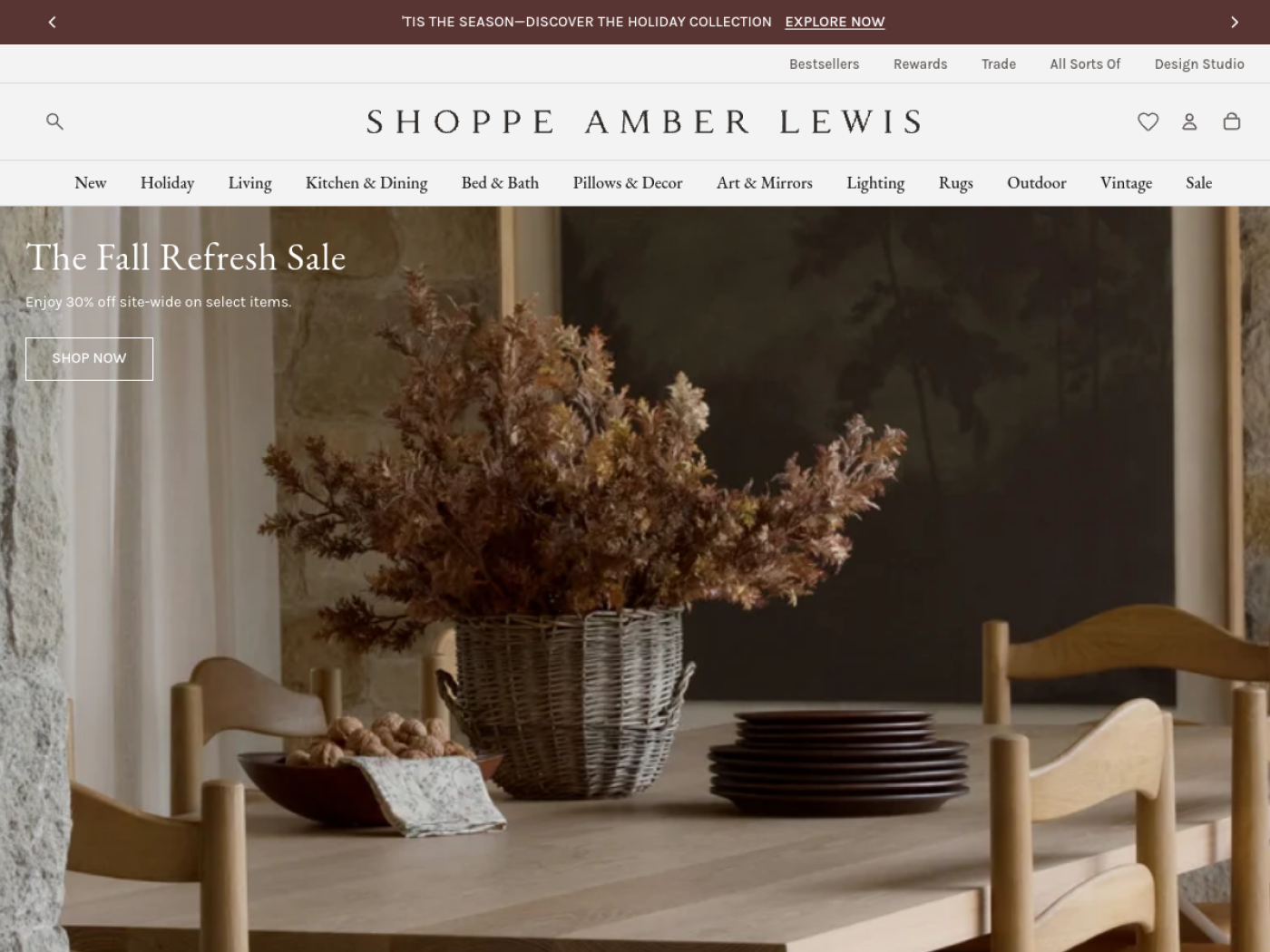
Shoppe Amber Interiors makes the store feel like an extension of an interior-design point of view. The strongest visual asset is not any single product card, but the consistency of complete rooms, materials, and styling across the site.
That approach works because home shoppers are often buying toward a look. Editorial content becomes more commercially useful when it connects back to specific products, categories, or room collections instead of living separately from the store.
24. Leesa
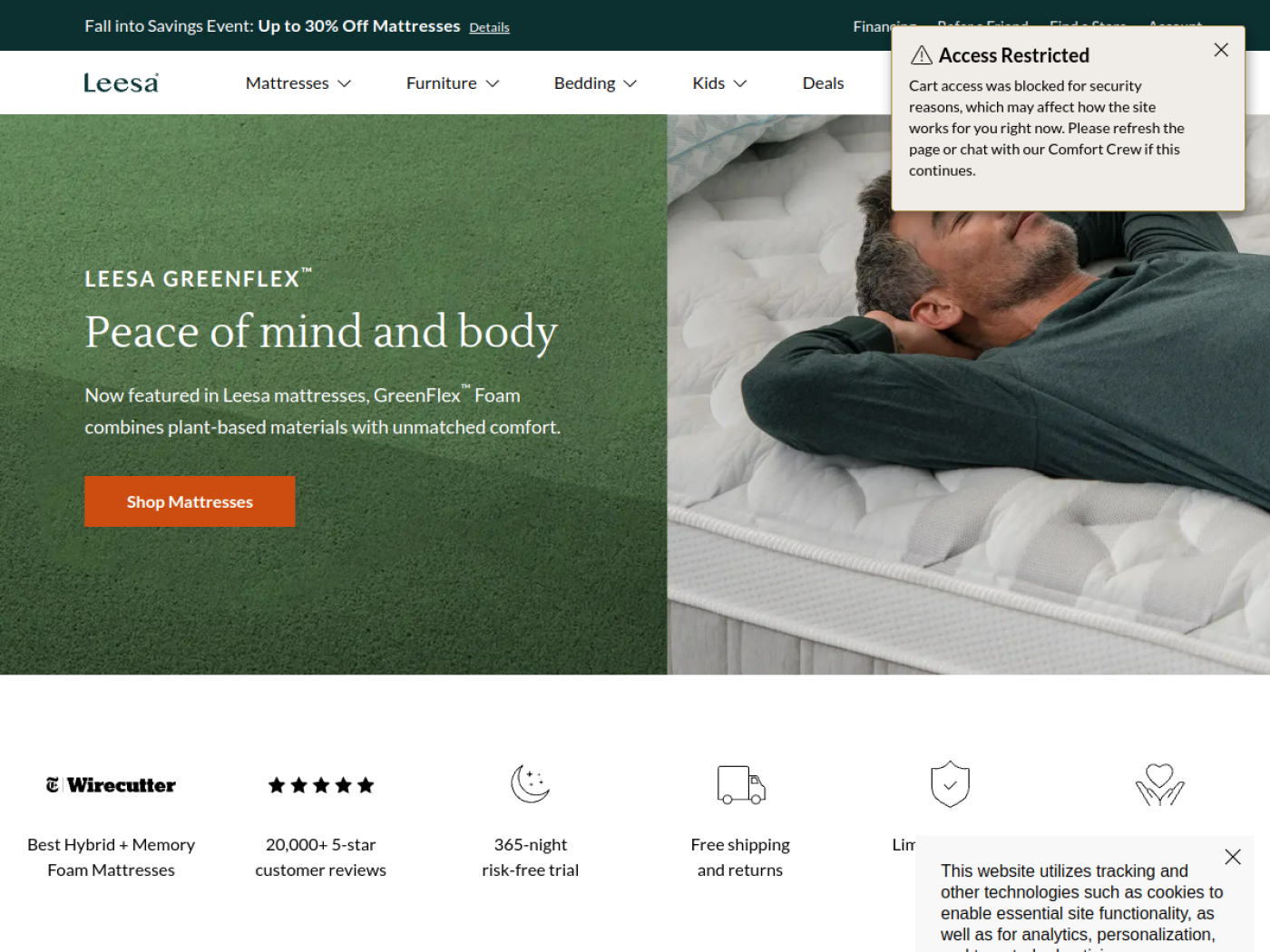
Leesa sits at the high-consideration end of home ecommerce. A mattress is expensive, difficult to evaluate online, and closely tied to personal comfort. The brand therefore has to sell more than a visual style. It needs reassurance, clear product differences, and a reason to trust the company behind the purchase.
Its social-impact positioning adds another layer to that trust story. The broader lesson is that mission works best when the core buying information is already strong. Values can differentiate the brand, but they should complement, not replace, practical reassurance.
25. Goodee
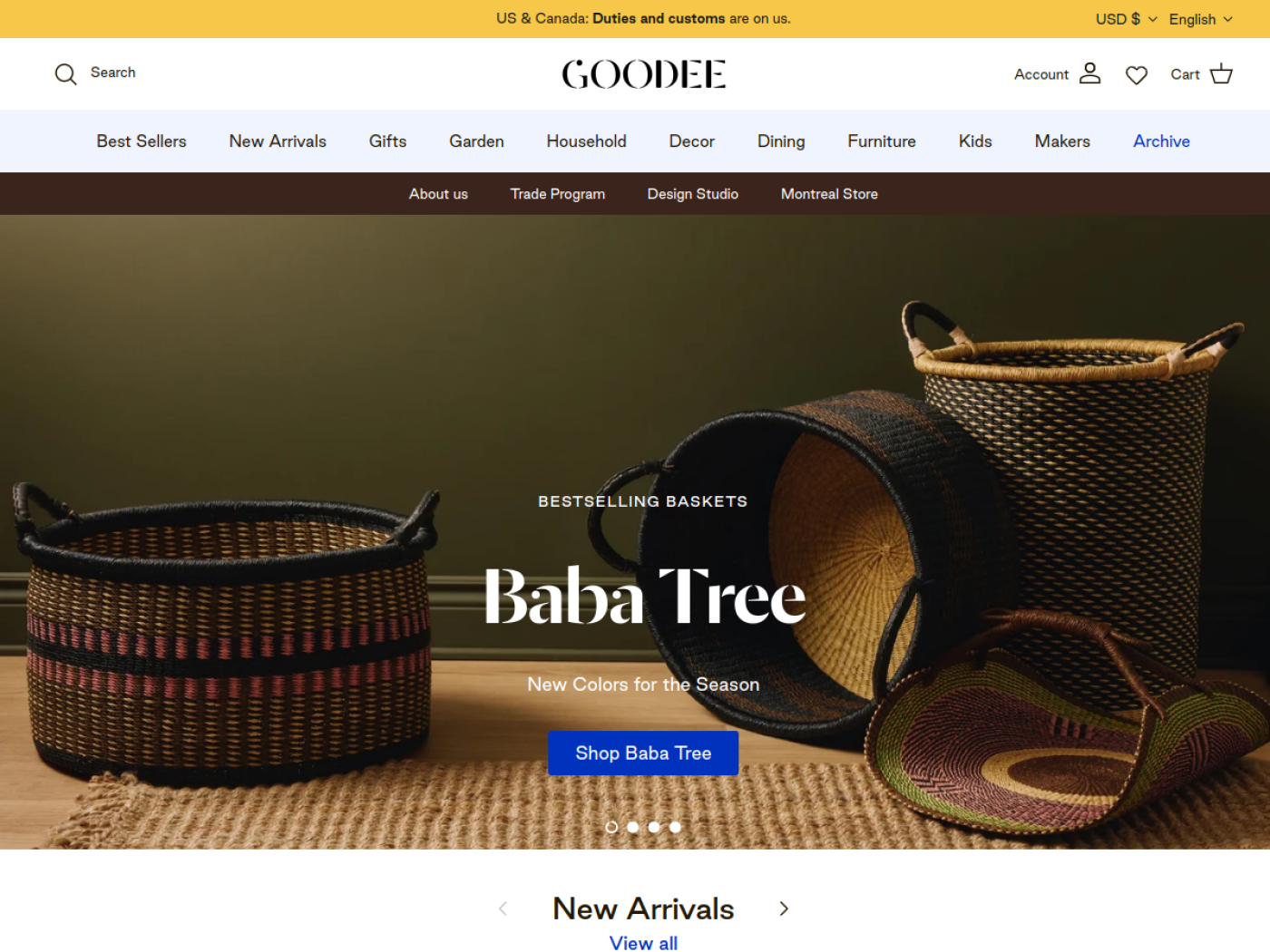
Goodee curates a broad home and lifestyle catalog around design, craftsmanship, and more considered production. Instead of treating values as a separate brand-story page, the store brings useful context into discovery through brands, product types, origin, and other filters.
That approach is more useful than a generic sustainability claim. Values-led merchandising becomes actionable when shoppers can use the information to narrow the catalog and understand why one product belongs in the assortment.
What the Best Shopify Home Decor Store Designs Have in Common
The strongest Shopify home decor store designs do not share one aesthetic. Some are minimalist, some are colorful, some feel like design magazines, and others are highly functional. What they share is a better understanding of what customers cannot evaluate through a screen.
1. They show the product in a room and in detail
A room image answers, How will this feel in my space? A close-up answers, What am I actually buying? Strong stores use both. Furniture needs scale, rugs need texture, bedding needs material context, and lighting often needs both an illuminated room and a product-level view.
2. Dimensions are treated as selling information
A dimension buried in an accordion is technically present but commercially weak. Large-item stores make width, depth, height, seating capacity, rug size, or frame scale easy to understand. Comparative cues can be more useful than raw numbers alone.
3. Navigation reflects rooms, styles, and use cases
Furniture, Rugs, Lighting, and Bedding are necessary categories, but customers also browse by Living Room, Small Spaces, Neutral Decor, Pet-Friendly Plants, Gallery Walls, or New Arrivals. Intent-based paths reduce the distance between inspiration and a relevant product set.
4. Complex variants are visually controlled
Finishes, fabrics, sizes, frame options, and colorways can quickly make a product page feel technical. The better stores group choices logically and update imagery as selections change. The goal is not fewer options. It is lower cognitive load.
5. Shipping and delivery are part of conversion
For a candle, shipping may be a minor detail. For a sofa or dining table, it can determine whether the purchase happens. High-ticket home stores need clear lead times, delivery methods, assembly expectations, return rules, and any freight limitations before checkout.
6. Cross-selling is contextual
A generic recommendation carousel says very little. A styled bedroom, table setting, sofa arrangement, or gallery wall already demonstrates why products belong together. The recommendation becomes more persuasive because the visual relationship is obvious.
7. Mobile performance is protected from the visual ambition
Home decor stores naturally want large imagery, video, swatches, and configurators. Those assets only help if the mobile page remains usable. The most important buying controls, dimensions, variants, and delivery information should not disappear beneath decorative content.
The 10 Most Useful Merchandising Tactics Across These Stores
| Tactic | Strong examples | Best for | Main goal |
|---|---|---|---|
| Shop the Room | McGee & Co., Lulu and Georgia, Shoppe Amber Interiors | Furniture and decor | Discovery + AOV |
| Guided sets and bundles | Brooklinen, Our Place, Caraway | Bedding, kitchen, coordinated collections | AOV + decision simplicity |
| Room and style navigation | Lulu and Georgia, Revival Rugs, Goodee | Large visual catalogs | Discovery |
| Variant-reactive imagery | Schoolhouse, Caraway, Burrow | Finish-, size-, or color-heavy products | Conversion |
| Guided customization | Framebridge, Inside Weather, MirrorMate | Custom or configurable products | Conversion |
| Visual product education | Ruggable, The Sill, Pura | Unfamiliar or education-heavy products | Conversion + trust |
| Drop-based merchandising | Olive Ateliers | One-of-a-kind or limited inventory | Urgency + retention |
| Provenance and sourcing proof | The Citizenry, Goodee, Fyrn | Premium and values-led brands | Trust + perceived value |
| Curated collection pages | Jonathan Adler, HORNE, Goodee | Design-led brands and marketplaces | Discovery + brand differentiation |
| Measurement and fit guidance | MirrorMate, Framebridge, Inside Weather | Custom and space-sensitive products | Conversion + confidence |
How Shopify Home Decor Stores Can Increase Average Order Value
Home decor is naturally suited to multi-product merchandising because shoppers often buy toward a room, a setup, or a visual result. The goal is not to force unrelated products into the cart. It is to make the larger purchase easier to understand.
Make Styled Rooms Shoppable
If a sofa, rug, lamp, side table, and cushions appear in the same campaign image, give customers a direct path to the products shown. The room itself becomes the explanation for the cross-sell.
Build Coordinated Room or Collection Bundles
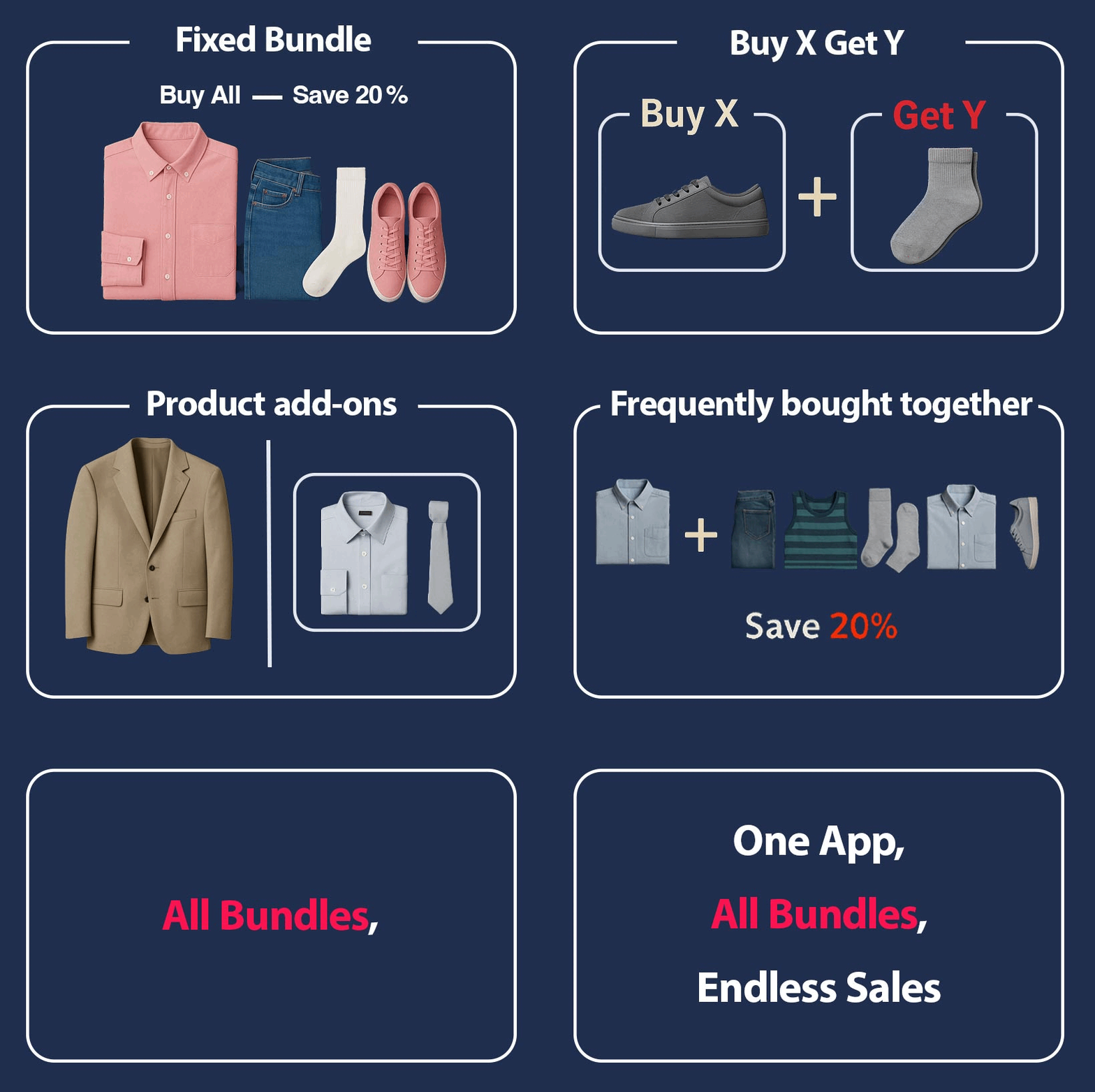
A bedroom set, table setting, gallery wall, or bedding configuration can work as a fixed set when the combination is already curated. When personal taste matters more, a mix-and-match bundle can let shoppers choose from a controlled group while still building a coherent combination.
Pair the Hero Product With Useful Accessories
A sofa can lead naturally to cushions or a matching ottoman. A frame can lead to a print. A plant can lead to a planter or care item. A cookware set can lead to utensils or tableware. The strongest add-on improves the original purchase instead of merely increasing the total.
Use Sets to Reduce Decision Fatigue
Customers sometimes spend more when they have fewer decisions to make. Bedding sets, cookware sets, gallery-wall combinations, and ready-made room edits can turn several product choices into one understandable outcome.
Use Free-Shipping Thresholds Carefully
For smaller decor items, a free-shipping threshold can encourage an additional purchase. For bulky furniture, shipping economics are different, so the threshold and eligible products need to reflect actual fulfillment costs rather than copying a generic ecommerce offer.
Discount the Combination, Not the Brand
Premium home brands do not always need a large sitewide discount. A modest saving on a complete set can reward a larger basket while protecting the perceived value of individual products. Before publishing the offer, model the margin and customer savings using a clear bundle pricing strategy.
Which Tactics Fit Your Type of Home Decor Store?
| Store type | Best tactics | Be careful with |
|---|---|---|
| Furniture | Room photography, dimensions, configurators, swatches, delivery clarity, financing | Hiding freight or assembly details until checkout |
| Rugs and textiles | Room scale, texture close-ups, size filters, style collections, samples | Relying on color names without visual context |
| Bedding and bath | Material comparison, guided sets, bundles, care education | Too many near-identical product choices with no guidance |
| Lighting and hardware | Reactive variant imagery, specification tables, installation guidance | Minimal PDPs that omit technical information |
| Wall art and framing | Gallery walls, room mockups, guided customization, frame pairings | Showing hundreds of isolated designs with no curation |
| Plants and living decor | Care tags, use-case collections, education, compatible planters | Making beginners decode specialist terminology |
| Kitchen and tabletop | Color-led variants, sets, coordinated collections, hero-product cross-sells | Expanding the catalog without a clear visual system |
| Vintage and one-of-a-kind decor | Drops, provenance, new-arrival alerts, scarcity based on real inventory | Artificial urgency that does not match inventory reality |
| Sustainable and artisan decor | Material proof, certifications, maker stories, repairability | Vague sustainability language with little evidence |
| Curated multi-brand stores | Strong collection logic, filters, editorial curation, designer stories | Looking like an undifferentiated marketplace |
Is Shopify Good for Home Decor Stores?
Yes. Shopify can support visual catalogs, large product collections, variants, product bundles, international selling, accelerated checkout, and the apps or custom development needed for product recommendations, configurators, reviews, and richer merchandising. For furniture and other high-consideration products, merchants may also need specialized solutions for freight, white-glove delivery, swatches, or complex inventory.
The platform is not the differentiator by itself. McGee & Co. and Ruggable can both use Shopify while solving completely different buying problems. The advantage comes from matching the storefront to the product: how customers discover it, what they need to understand, what makes them hesitate, and which related products genuinely complete the purchase.
Final Thoughts
The best Shopify home decor stores do more than present beautiful products. They help shoppers imagine the product in a real space and then remove the practical uncertainty that stands between inspiration and checkout.
McGee & Co. makes rooms shoppable. Brooklinen simplifies a technical category with guided sets. The Sill turns education into discovery. Schoolhouse organizes variant complexity. MirrorMate turns measurement and customization into a guided decision. Olive Ateliers adapts the storefront to one-of-a-kind inventory. Fyrn makes longevity part of the product case.
The common thread is simple: show the outcome, explain the product, and make the next decision easier.
If you are improving your own home decor Shopify store, start with the customer uncertainty that matters most in your category. Then add room-based merchandising, bundles, customization, and cross-sells only where they make that decision clearer.
FAQ
What are some of the best Shopify home decor stores?
Examples worth studying include McGee & Co., Ruggable, Brooklinen, Burrow, Lulu and Georgia, The Citizenry, The Sill, Schoolhouse, Revival Rugs, Inside Weather, Parachute, Jonathan Adler, Our Place, Caraway, Framebridge, Venus et Fleur, MirrorMate, and Goodee. The best example depends on whether you are studying design, product education, customization, high-ticket conversion, or multi-product merchandising.
What makes a good Shopify home decor store?
A strong store combines aspirational room photography with practical product information. Customers should be able to understand scale, materials, dimensions, variants, delivery expectations, and how products work together without digging through the site.
How can a home decor Shopify store increase average order value?
Shoppable rooms, coordinated sets, room bundles, product-accessory pairings, gallery-wall combinations, and carefully designed shipping thresholds can increase AOV. The best offer makes a larger purchase feel more complete, not more complicated.
Â
What should a furniture store show on its product pages?
Furniture PDPs should make dimensions, materials, configurations, delivery method, lead time, assembly requirements, care, and return conditions easy to find. Room-context photography, swatches, video, or 3D visualization can further reduce uncertainty.
What is the best Shopify theme for home decor?
There is no single best theme for every home decor store. The right choice depends on catalog size, image requirements, filtering, product variants, page speed, and whether you need features such as lookbooks, product hotspots, or large editorial sections. Theme fit matters more than choosing a theme because another decor brand uses it.
Â
Can small home decor brands use the same tactics as large Shopify stores?
Yes, but they should adapt the principle rather than copy the implementation. A small brand may not need AR or a complex configurator, but it can still improve scale photography, room-based collections, product education, bundles, and shipping clarity.
Â