23 Shopify Jewelry Store Examples and What to Learn From Them
1. Mejuri
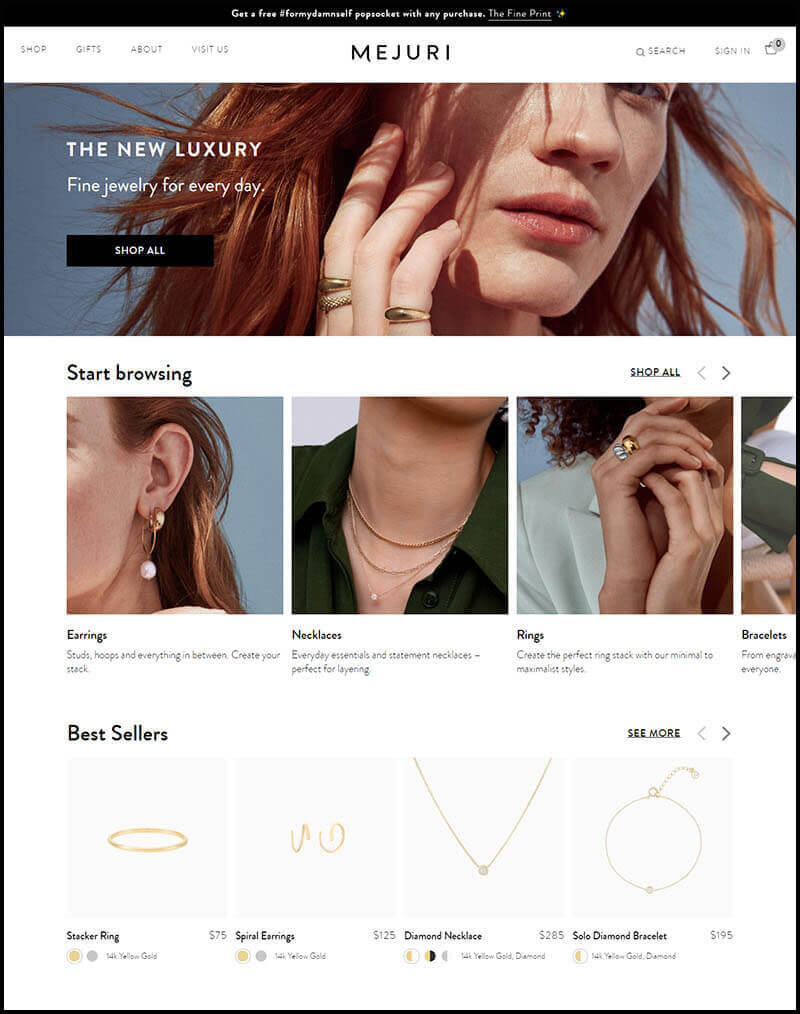
Mejuri is a strong example of how a Shopify jewelry store can expand the number of reasons customers have to buy. Instead of framing fine jewelry only around birthdays, anniversaries, or engagement moments, the store presents pieces as part of an everyday wardrobe. New collections, lifestyle photography, and styling-led merchandising make browsing feel closer to fashion discovery than traditional jewelry shopping.
What they do: Use new-arrival edits, lifestyle imagery, and styled combinations to make the catalog feel active rather than static.
Why it works: The more occasions customers can associate with the product, the less the category depends on rare milestone purchases.
What you can copy: Create seasonal edits, “Shop the Look” modules, and recurring product drops that give existing customers a reason to return.
Business impact: Repeat purchase potential and stronger product discovery.
2. Missoma

Missoma is particularly good at turning complementary jewelry into a merchandising system. Necklaces are shown in layers, rings can be stacked, and earrings are styled as part of a finished look. This changes the unit of consideration: the customer is no longer evaluating one isolated SKU, but a combination that produces a specific style.
What they do: Merchandise multiple pieces as one visual result.
Why it works: The cross-sell feels useful because the shopper can see exactly why the products belong together.
What you can copy: Create “Shop the Look,” “Build Your Stack,” or “Layer It With” sections that connect campaign imagery to the products shown in it.
Business impact: More relevant multi-item carts and higher AOV potential.
3. PDPAOLA

PDPAOLA shows how a large jewelry catalog can stay visually distinctive. The store uses named collections, campaign-led merchandising, and editorial imagery alongside conventional product categories. That gives shoppers two ways to browse: they can shop by what the product is, or by the story, mood, and collection it belongs to.
What they do: Layer editorial collections on top of standard product taxonomy.
Why it works: Category navigation is efficient, while campaign-led merchandising creates desire and helps customers discover products they were not searching for directly.
What you can copy: Keep Rings, Earrings, Necklaces, and Bracelets, but add seasonal chapters, material edits, lookbooks, and collection-specific landing pages.
Business impact: Deeper browsing and stronger brand differentiation.
4. Astrid & Miyu
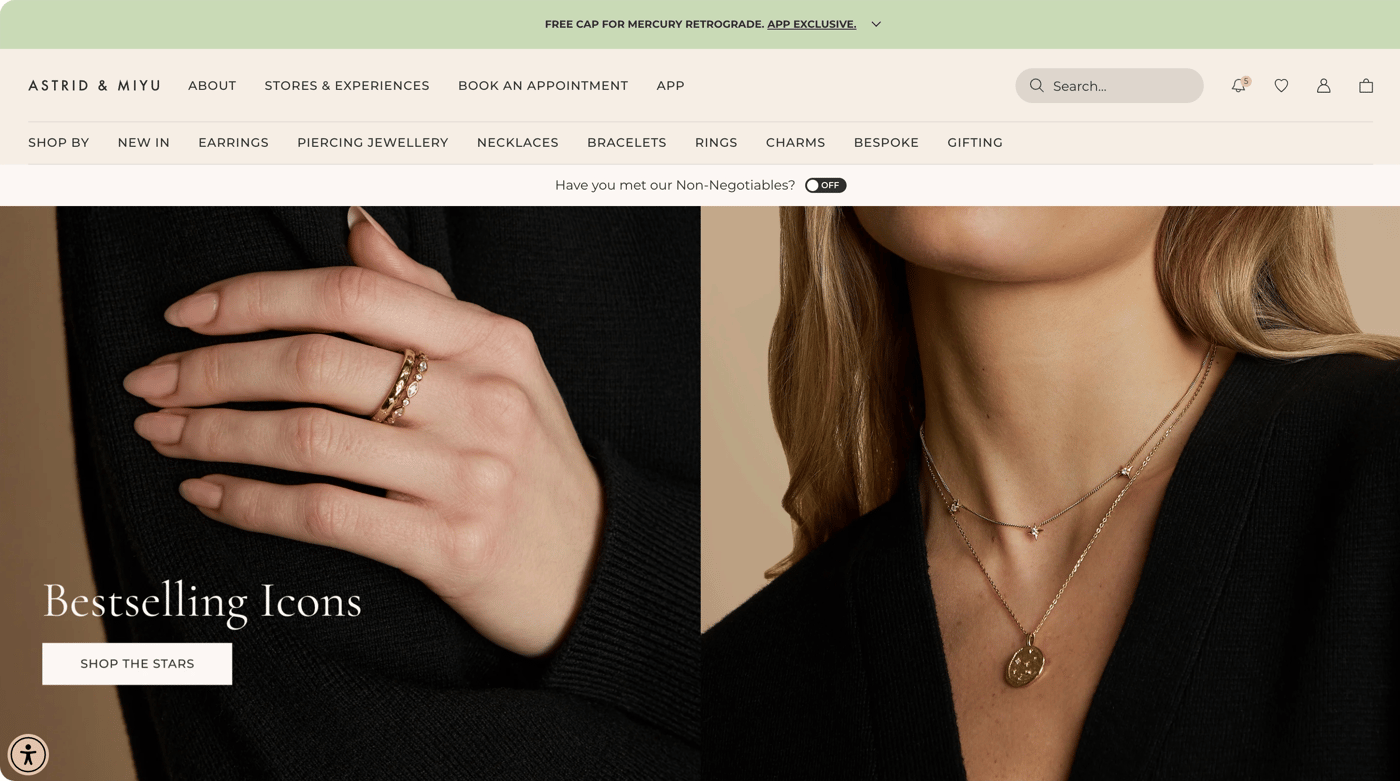
Astrid & Miyu has built a recognizable shopping experience around ear stacks, piercing, permanent jewelry, personalization, and styling. That is valuable because the desired outcome often requires several products rather than one. The store does not simply sell earrings; it helps shoppers imagine and build a finished ear stack.
What they do: Merchandise the final look instead of only the individual component.
Why it works: When several products are required to create the desired outcome, multi-item buying becomes part of the solution rather than an upsell.
What you can copy: Build dedicated stack pages, styling guides, piercing edits, or curated combinations around common customer looks.
Business impact: Higher basket size, repeat visits, and stronger service-to-product cross-selling.
5. Monica Vinader
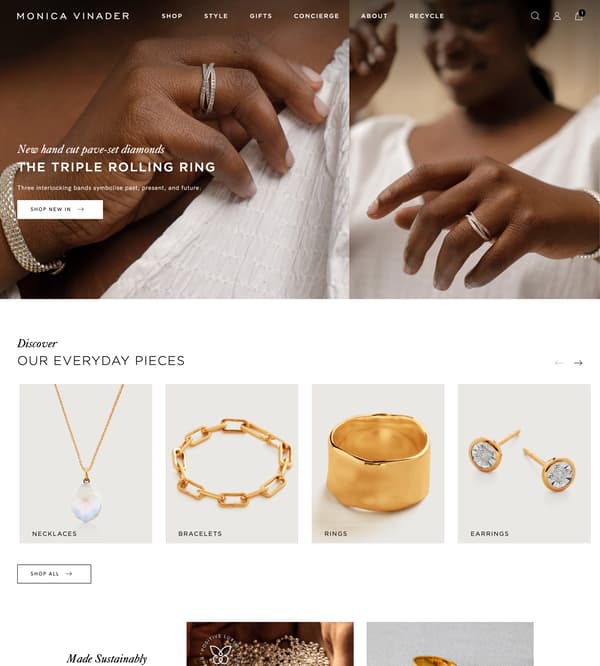
Monica Vinader demonstrates how personalization can be part of the core proposition rather than a hidden custom-order service. Engraving, gifting, meaningful jewelry, and premium product presentation sit close to the purchase journey. That matters in jewelry because customers often buy for emotional reasons, and personalization can increase perceived value without relying on a deeper discount.
What they do: Surface customization before the shopper has already committed to a standard product.
Why it works: Personalization is more persuasive when it is presented as a product benefit, not an extra task after selection.
What you can copy: Show engraving, initials, birthstones, and gift personalization on relevant collection and product pages.
Business impact: Improved gift conversion and higher perceived product value.
6. Ana Luisa
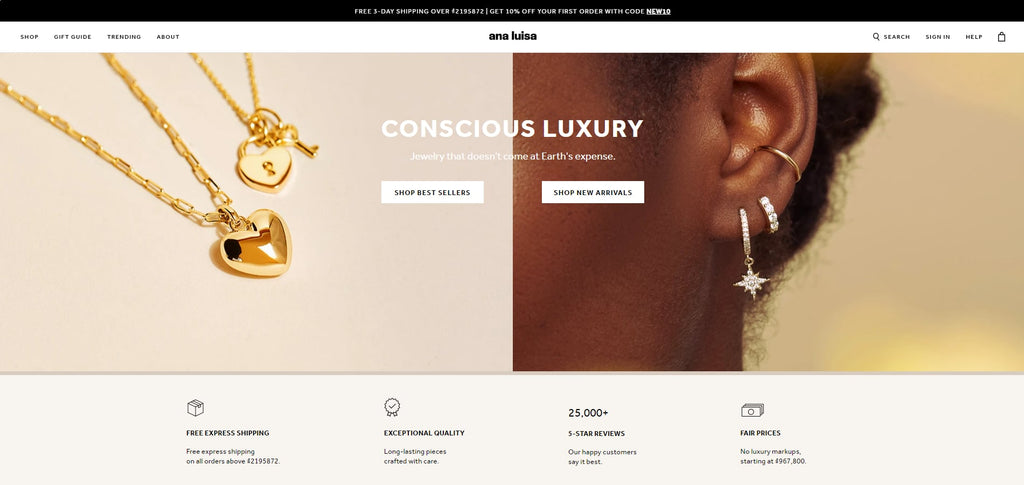
Ana Luisa is useful to study from a product-discovery perspective. When a jewelry catalog grows, similar-looking products can quickly become overwhelming. Clear navigation, recognizable collections, price positioning, and visual merchandising help customers narrow the catalog without needing to understand every material or style before they start.
What they do: Reduce decisions at the navigation level.
Why it works: A larger assortment only creates value if shoppers can move from intent to a manageable set of products quickly.
What you can copy: Offer routes by category, material, collection, gift intent, bestseller status, and price range instead of relying on one long product grid.
Business impact: Lower browsing friction and better collection-page engagement.
7. Aurate
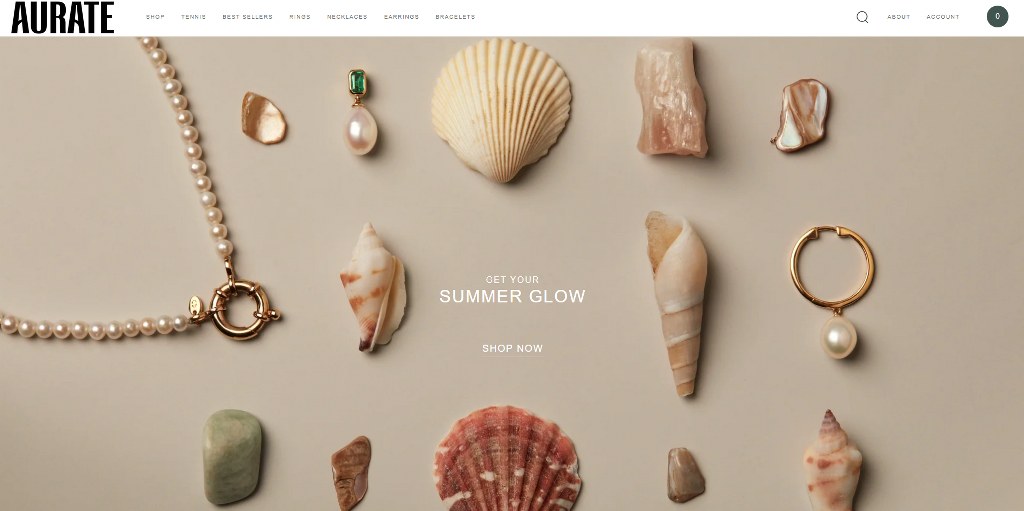
Aurate is a good reminder that premium jewelry needs more information, not less. Fine-jewelry shoppers often want clarity around materials, stones, sourcing, sizing, warranty, returns, and long-term wear. The store balances a refined visual presentation with the reassurance customers need before making a higher-value purchase.
What they do: Make trust information part of the product experience.
Why it works: As purchase risk rises, unanswered questions become stronger reasons to delay or abandon the purchase.
What you can copy: Move material explanations, warranty, care, shipping, size guidance, and returns closer to the Add to Cart decision.
Business impact: Reduced purchase anxiety and stronger conversion on higher-AOV products.
8. Ring Concierge
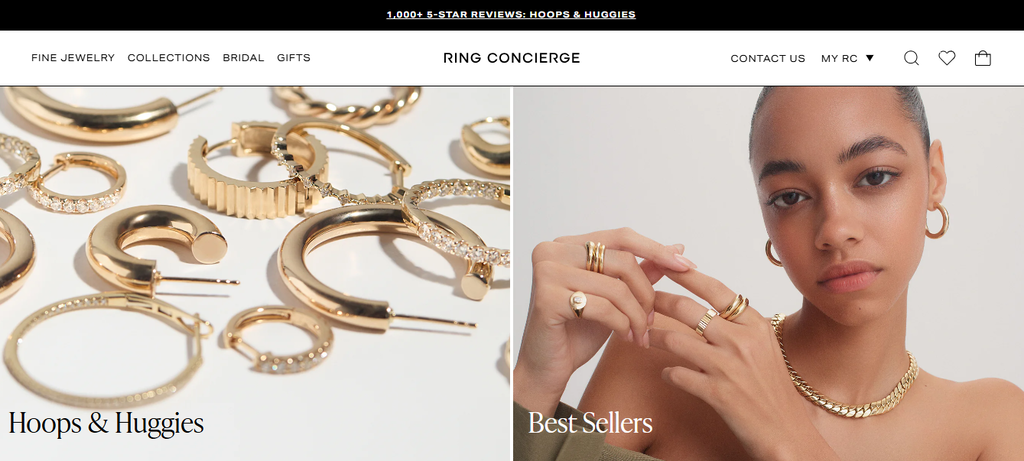
Ring Concierge serves customers with very different levels of purchase complexity. Someone researching an engagement ring may need education, consultation, and comparison tools, while someone buying ready-to-ship fine jewelry needs a much faster path. The store is useful because it does not force both intents into the same experience.
What they do: Design separate journeys for different purchase-risk levels.
Why it works: A high-consideration customer needs reassurance and assistance; a ready-to-buy customer needs speed.
What you can copy: Separate bridal, consultations, custom work, and ready-to-ship collections clearly in navigation and merchandising.
Business impact: Better conversion paths for both high-ticket and lower-friction purchases.
9. Pura Vida
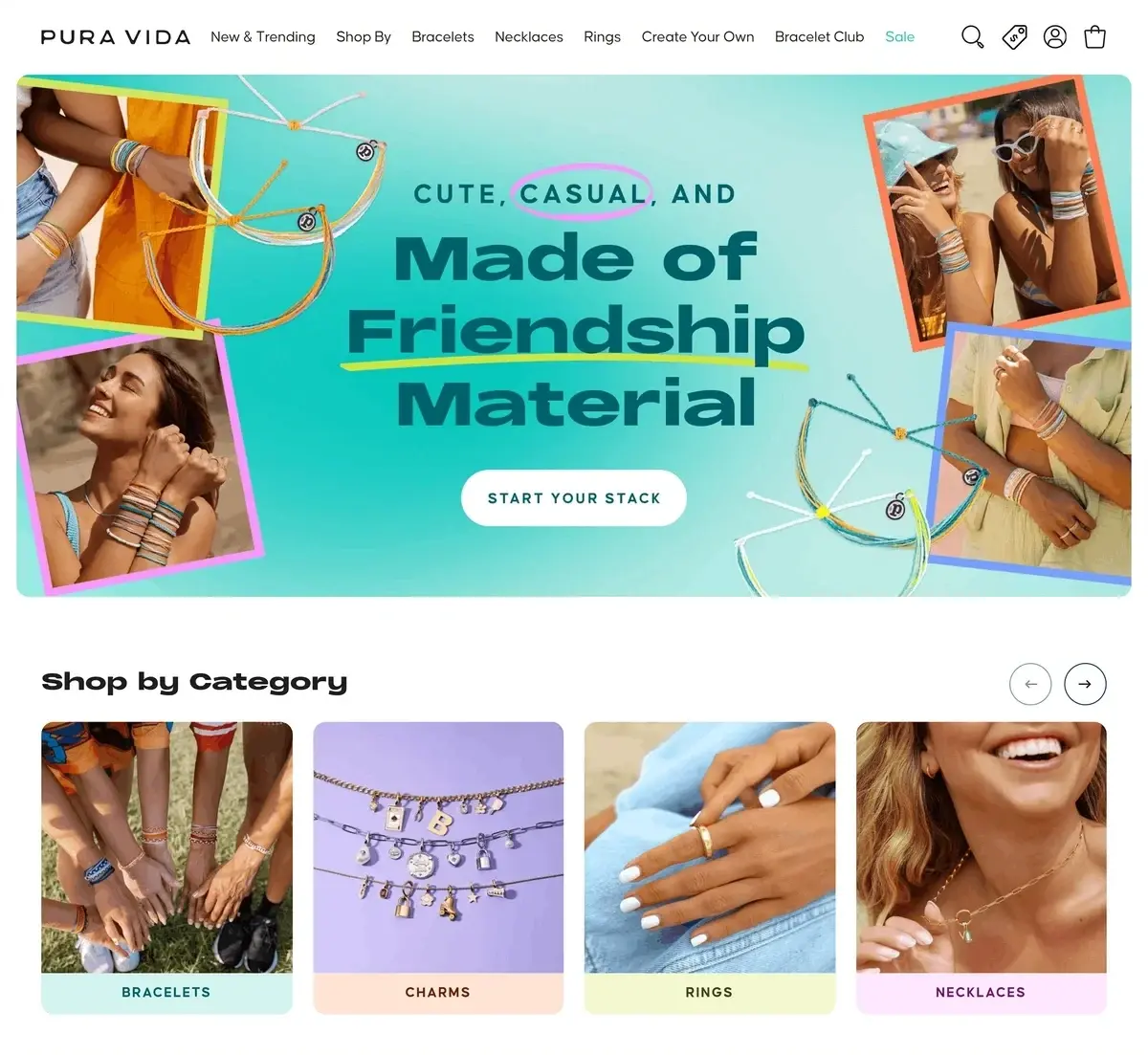
Pura Vida homepage screenshot
Pura Vida shows how jewelry can be merchandised around repeat purchase rather than rare milestones. Accessible pricing, colorful products, stackable designs, seasonal collections, and community-driven branding create many reasons to return without waiting for a major occasion.
What they do: Turn jewelry into a recurring fashion purchase.
Why it works: Lower-friction products can support collecting, stacking, gifting, and frequent newness.
What you can copy: Use seasonal drops, limited collections, loyalty, and stackable products to create repeat-purchase behavior.
Business impact: Higher purchase frequency and stronger customer retention.
10. Gorjana
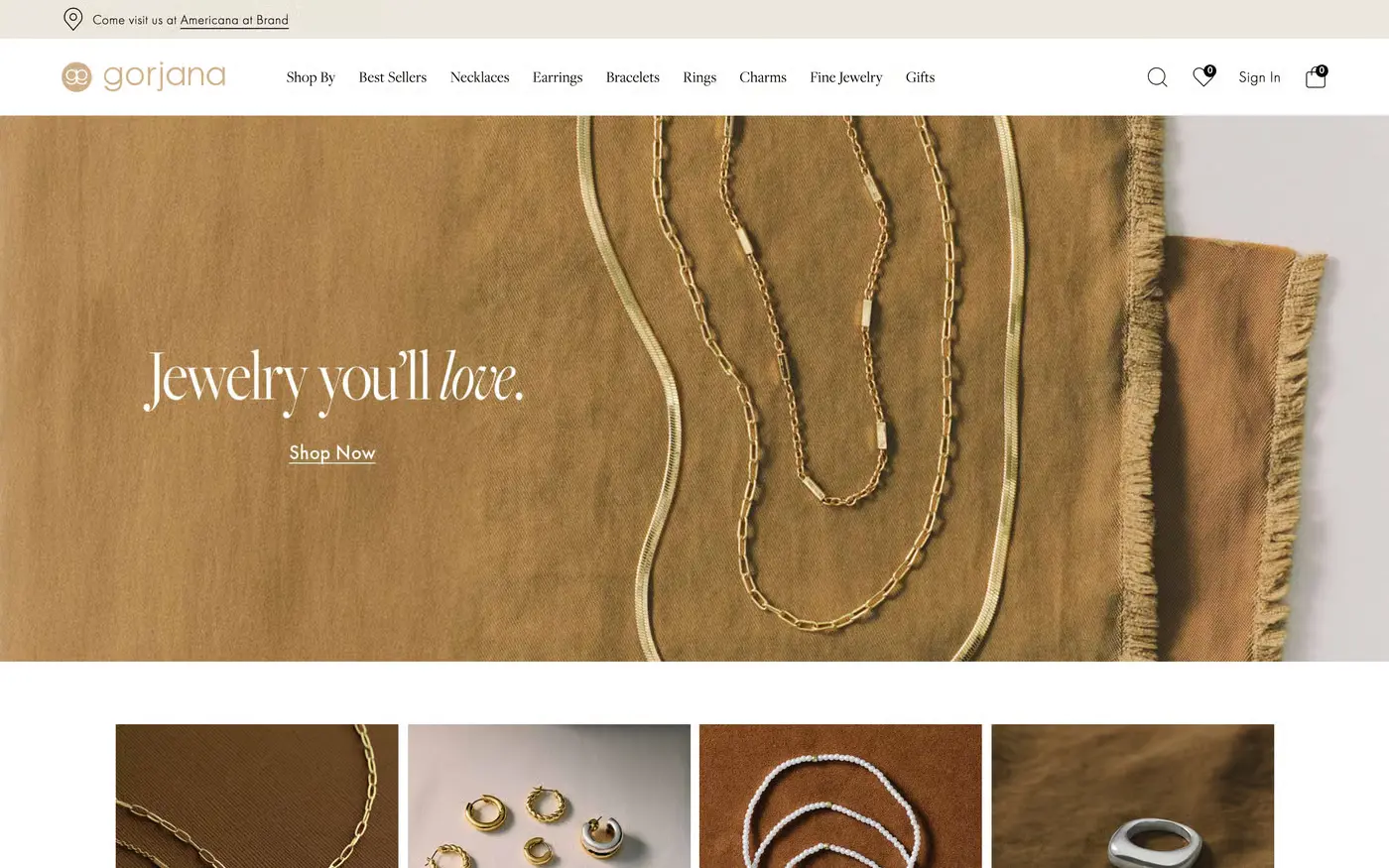
Gorjana homepage screenshot
Gorjana is well suited to lifestyle merchandising because many of its pieces are designed for everyday wear and easy combination. Instead of forcing shoppers to think only in terms of necklaces, rings, or earrings, merchandising can connect products to moments, outfits, and occasions.
What they do: Connect products to lifestyle occasions as well as categories.
Why it works: Customers often know the situation they are shopping for before they know the exact product.
What you can copy: Build edits around everyday layering, travel, gifting, events, summer styling, or workwear.
Business impact: More discovery paths and stronger contextual merchandising.
11. Vitaly
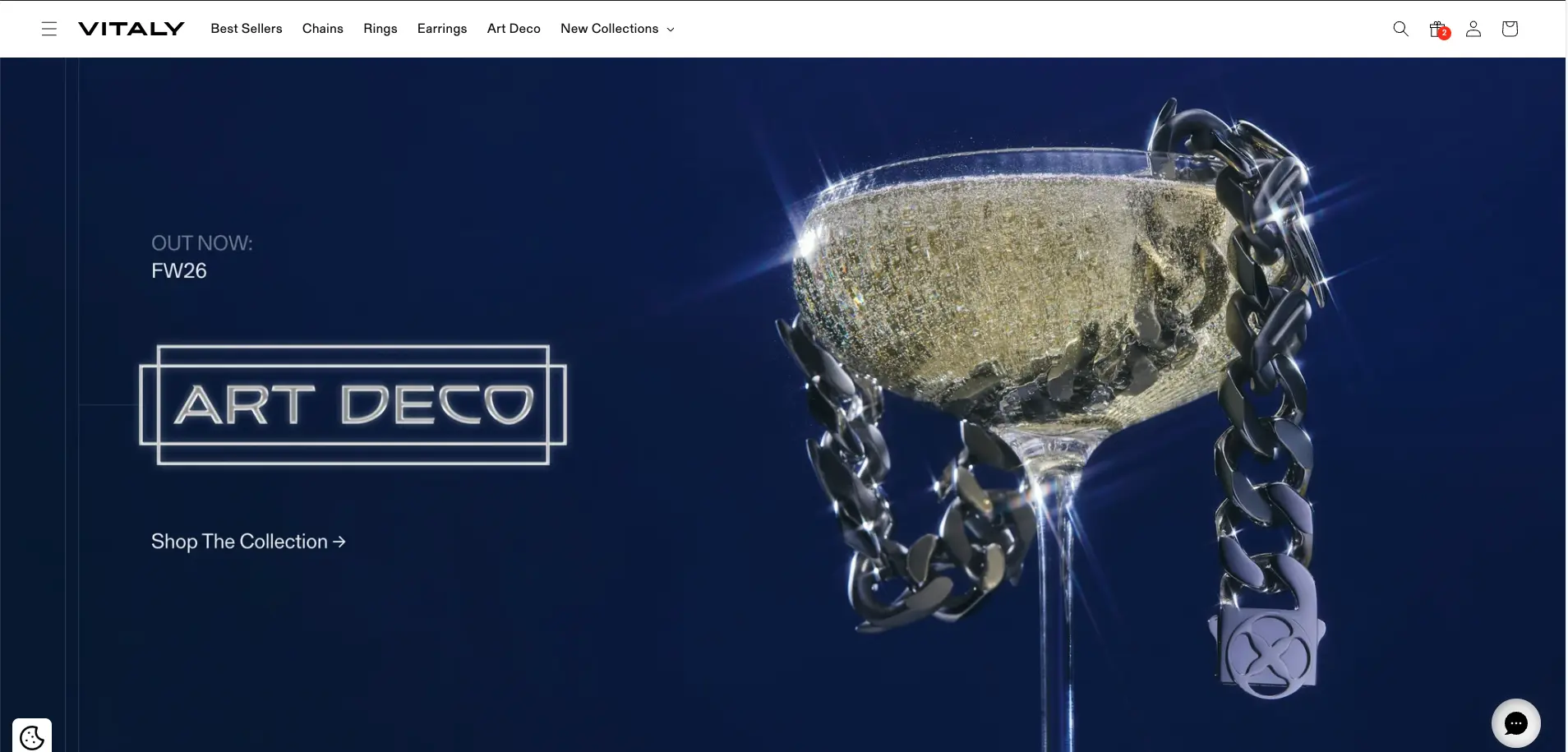 Vitaly homepage screenshot
Vitaly stands out because it does not try to resemble a conventional luxury jewelry store. Its industrial and contemporary visual language reinforces its product positioning and makes the brand immediately recognizable.
What they do: Use a visual identity that matches a specific audience rather than category conventions.
Why it works: Strong positioning helps the customer understand who the product is for before reading long brand copy.
What you can copy: Build your visual system around your audience and product niche instead of copying generic luxury aesthetics.
Business impact: Stronger brand recall and clearer differentiation.
12. BaubleBar
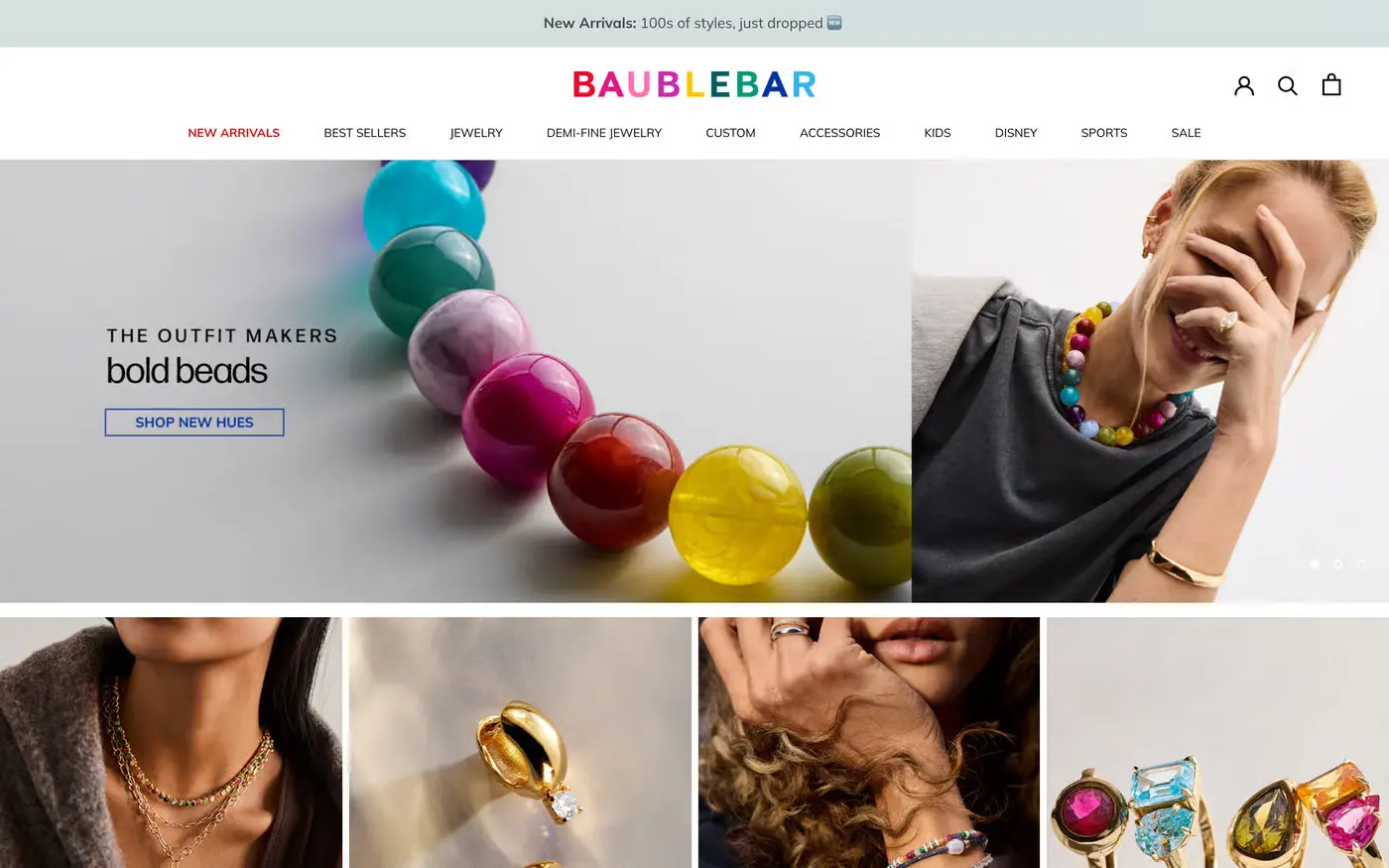 BaubleBar homepage screenshot
BaubleBar combines fashion jewelry with customization and licensed collaborations. This gives customers several reasons to shop beyond the product itself: trend, fandom, gifting, personalization, and occasion.
What they do: Use customization and collaborations as core collection strategies.
Why it works: Personalized and licensed products are harder to compare directly with generic alternatives.
What you can copy: Build dedicated collections around customization, partnerships, occasions, or fandom where they genuinely fit the brand.
Business impact: Stronger differentiation and better gifting appeal.
13. GLD
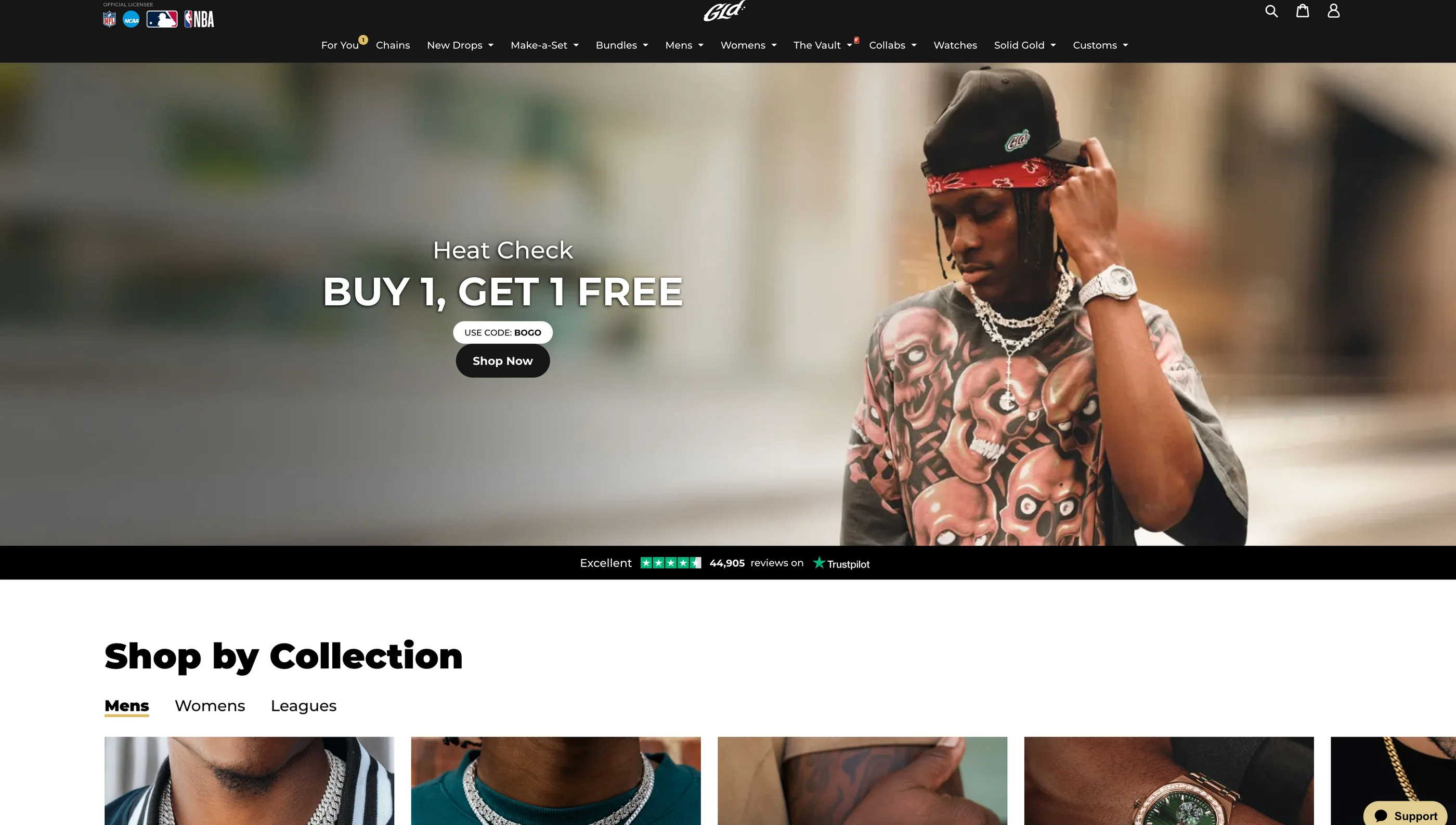 GLD homepage screenshot
GLD is one of the strongest examples of promotion-led jewelry merchandising. Bundles, BOGO offers, product drops, collaborations, shipping incentives, and guarantees are treated as visible parts of the shopping experience rather than hidden discount mechanics.
What they do: Turn promotional offers into structured merchandising.
Why it works: Bundles and collection-level offers feel more intentional than unrelated coupon messaging.
What you can copy: Use bundles, BOGO, sets, or product-specific offers when they fit your positioning instead of relying only on sitewide discounts.
Business impact: Higher AOV potential and clearer promotional communication.
14. CRAFTD London
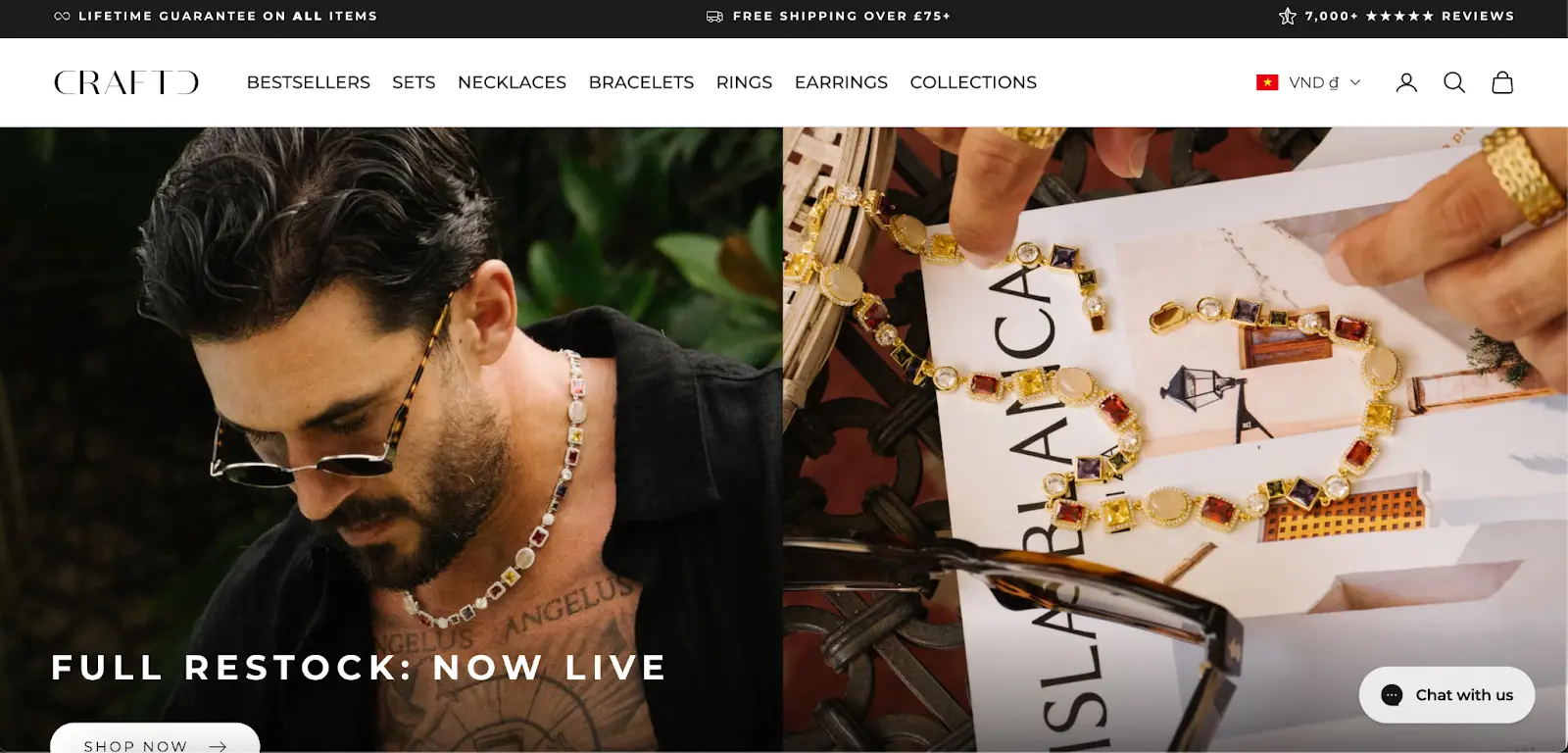 CRAFTD London homepage screenshot
CRAFTD London builds trust around durability, materials, and longevity. That is especially useful in men’s jewelry, where shoppers may not begin with deep knowledge of metals, finishes, or construction.
What they do: Make durability and product guarantees part of the value proposition.
Why it works: Clear reassurance lowers perceived risk for customers who are less familiar with jewelry materials.
What you can copy: Surface warranty, durability, water resistance, materials, and care information as selling points.
Business impact: Greater trust and stronger premium-price justification.
15. Miansai

Miansai uses a more editorial and art-directed approach than many jewelry retailers. Creative photography, video, and gallery-style product presentation help the store feel distinctive while the purchase controls remain obvious.
What they do: Use creative presentation to strengthen brand identity.
Why it works: Visual memorability can differentiate products that might otherwise look similar in a standard grid.
What you can copy: Experiment with campaign-led layouts, video, and editorial imagery while keeping category links and buying controls easy to locate.
Business impact: Higher brand distinctiveness without sacrificing usability.
16. Maison Miru

Maison Miru is a useful example for stores where shoppers can build many combinations. Piercing jewelry, earrings, and everyday pieces can be mixed, but not every customer wants to assemble a look from scratch. Curated sets and styling guidance can remove that mental work while still leaving room for customers who prefer to build their own.
What they do: Offer both individual pieces and pre-built combinations.
Why it works: Some customers value control; others value convenience. Serving both reduces friction.
What you can copy: Create starter kits, curated ear stacks, or ready-made combinations alongside individual SKUs.
Business impact: Easier product selection and more natural multi-item orders.
17. QALO

QALO became recognizable by focusing on silicone rings for active lifestyles rather than trying to compete as a general jewelry store. That narrow use case makes the value proposition immediately understandable: the product is designed around comfort, work, sport, and situations where a traditional metal ring may be impractical.
What they do: Build positioning around a specific customer problem.
Why it works: A clear use case is easier to remember and easier to merchandise than a broad catalog promise.
What you can copy: If your products solve a specific problem—waterproof jewelry, work-safe rings, travel jewelry, or sensitive-skin earrings—make that use case central to the store.
Business impact: Stronger differentiation and higher relevance for niche search intent.
18. King Ice
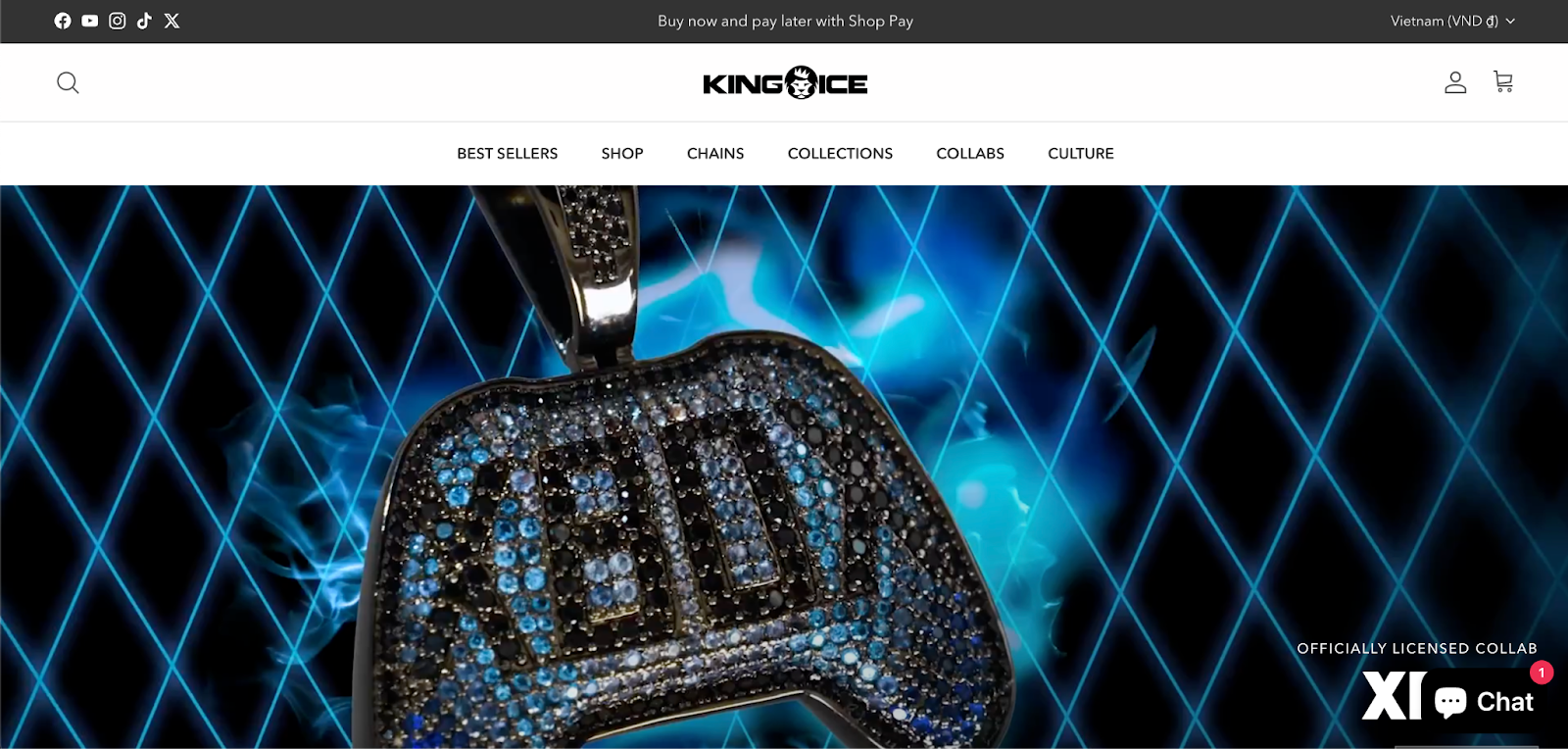
King Ice uses licensed collaborations to give customers a reason to enter through culture and fandom rather than through a generic “chain” or “pendant” category. Collaboration collections can function as their own campaigns, landing pages, and acquisition hooks while still feeding shoppers into the wider catalog.
What they do: Treat collaborations like full merchandising destinations.
Why it works: The customer arrives with an existing affinity, which can shorten the path from discovery to product interest.
What you can copy: Build partnership collections around relevant creators, franchises, communities, or cultural niches—only where there is a real audience fit.
Business impact: Stronger acquisition hooks and easier campaign merchandising.
19. En Route Jewelry
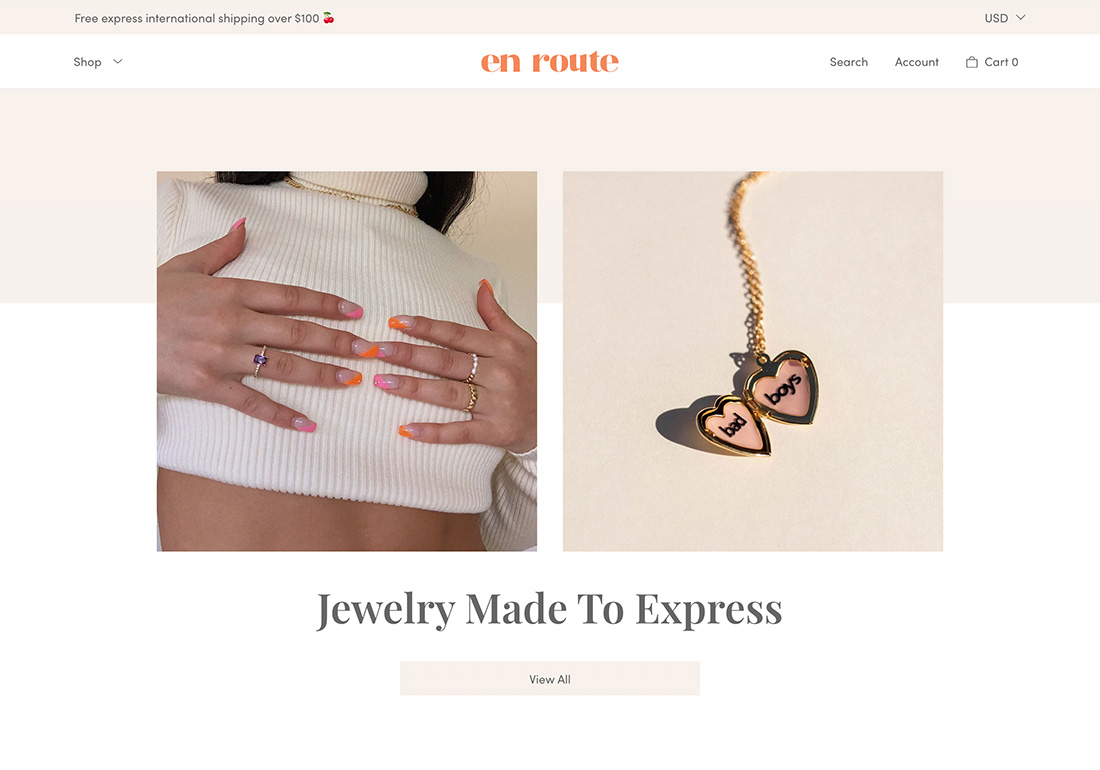
En Route combines accessible jewelry with loyalty, spend thresholds, bundles, and gifting mechanics. The useful part is how these tactics can work together: a threshold or bundle can increase the current order, while points and rewards create a reason to come back for the next one.
What they do: Design AOV and retention tactics as one system.
Why it works: The best promotion does not have to end when the first checkout is complete.
What you can copy: Pair bundle pricing, free-gift thresholds, or multi-buy offers with loyalty benefits that reward the customer again later.
Business impact: Larger baskets plus stronger repeat-purchase incentives.
20. Effy Jewelry

Effy Jewelry shows why large catalogs need more than product-type filters. Fine-jewelry shoppers may begin with a gemstone, collection, occasion, price point, or styling concept rather than a specific category. Giving them several overlapping discovery paths makes a large assortment easier to explore.
What they do: Let customers browse the catalog from different starting intents.
Why it works: A shopper who wants emerald jewelry should not need to decide whether they want a ring or necklace before they can begin browsing.
What you can copy: Add navigation by gemstone, material, collection, occasion, gift intent, price, and style where the catalog supports it.
Business impact: Better discoverability across large inventories.
21. Edge of Ember
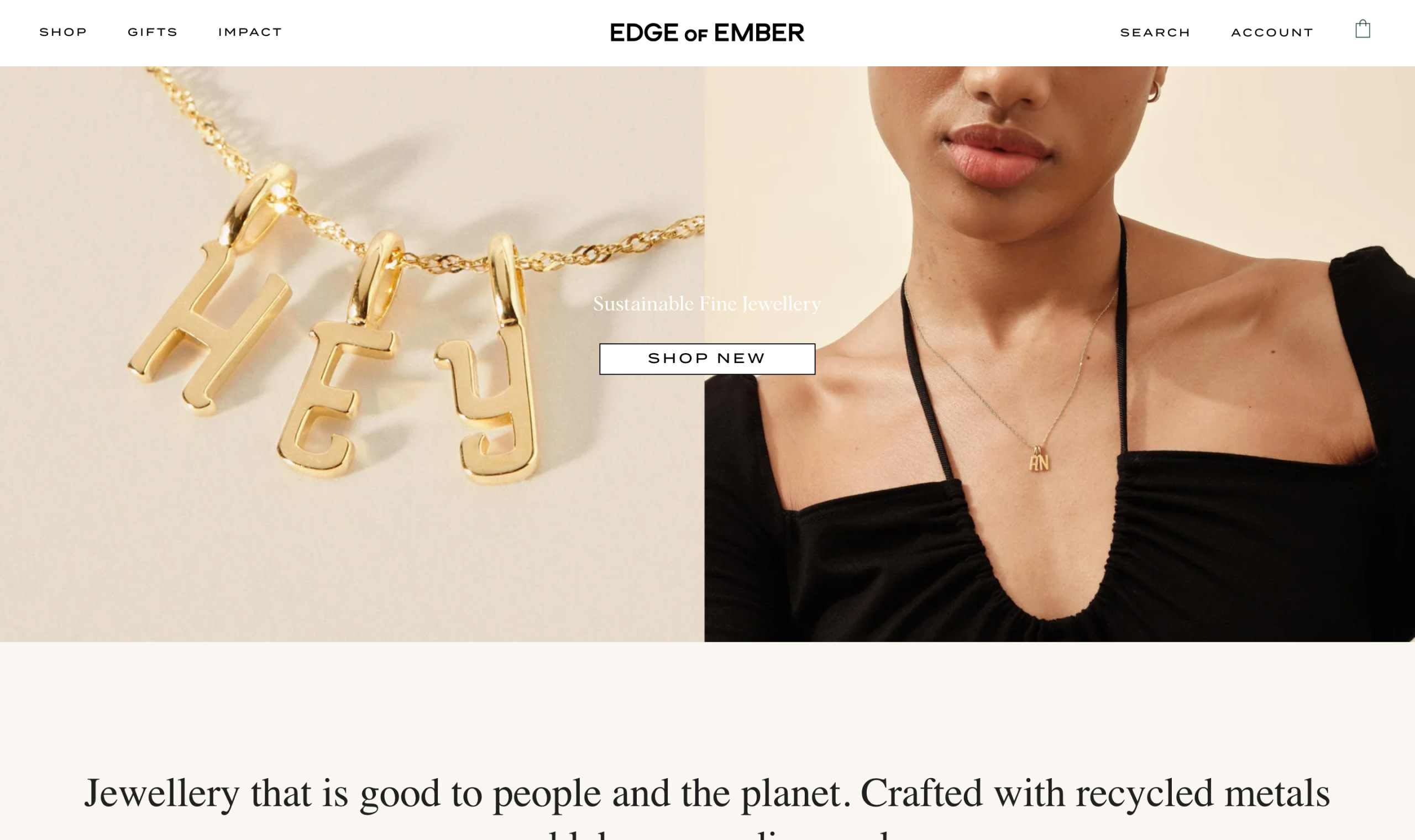
Edge of Ember is a useful example of integrating sustainability and sourcing into the value proposition. Recycled metals, responsible sourcing, personalization, and fine-jewelry positioning are not kept entirely separate from the shopping experience. That helps customers understand why the product is different, not only what it looks like.
What they do: Connect brand values directly to product value.
Why it works: Sustainability claims are more persuasive when customers can see how they change materials, sourcing, longevity, or manufacturing.
What you can copy: Bring material sourcing, recycled-content information, and relevant certifications into product and collection pages instead of leaving them only on an About page.
Business impact: Stronger differentiation for values-led shoppers and better premium-price justification.
22. Cernucci
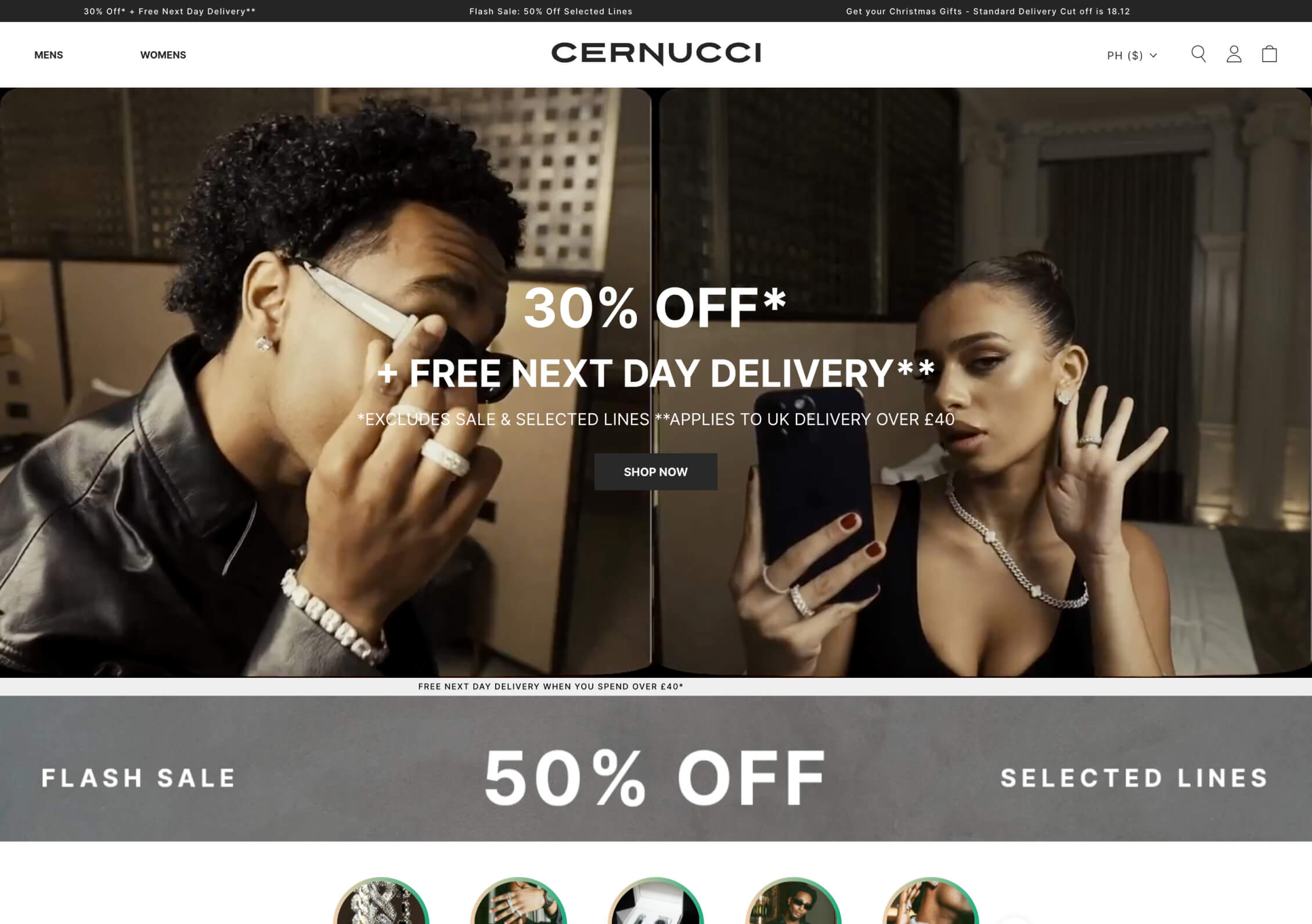
Cernucci combines jewelry, fashion, gift packaging, sets, and promotional offers in one high-energy ecommerce experience. This creates an AOV opportunity beyond jewelry-to-jewelry cross-selling: the store can recommend products that complete an outfit, not only products from the same category.
What they do: Cross-sell around the finished look, not the product department.
Why it works: Customers often think in outfits and occasions rather than internal catalog categories.
What you can copy: Use “Complete the Look” sections that can cross category boundaries where the products genuinely belong together.
Business impact: Broader cross-sell opportunities and larger carts.
23. Evry Jewels
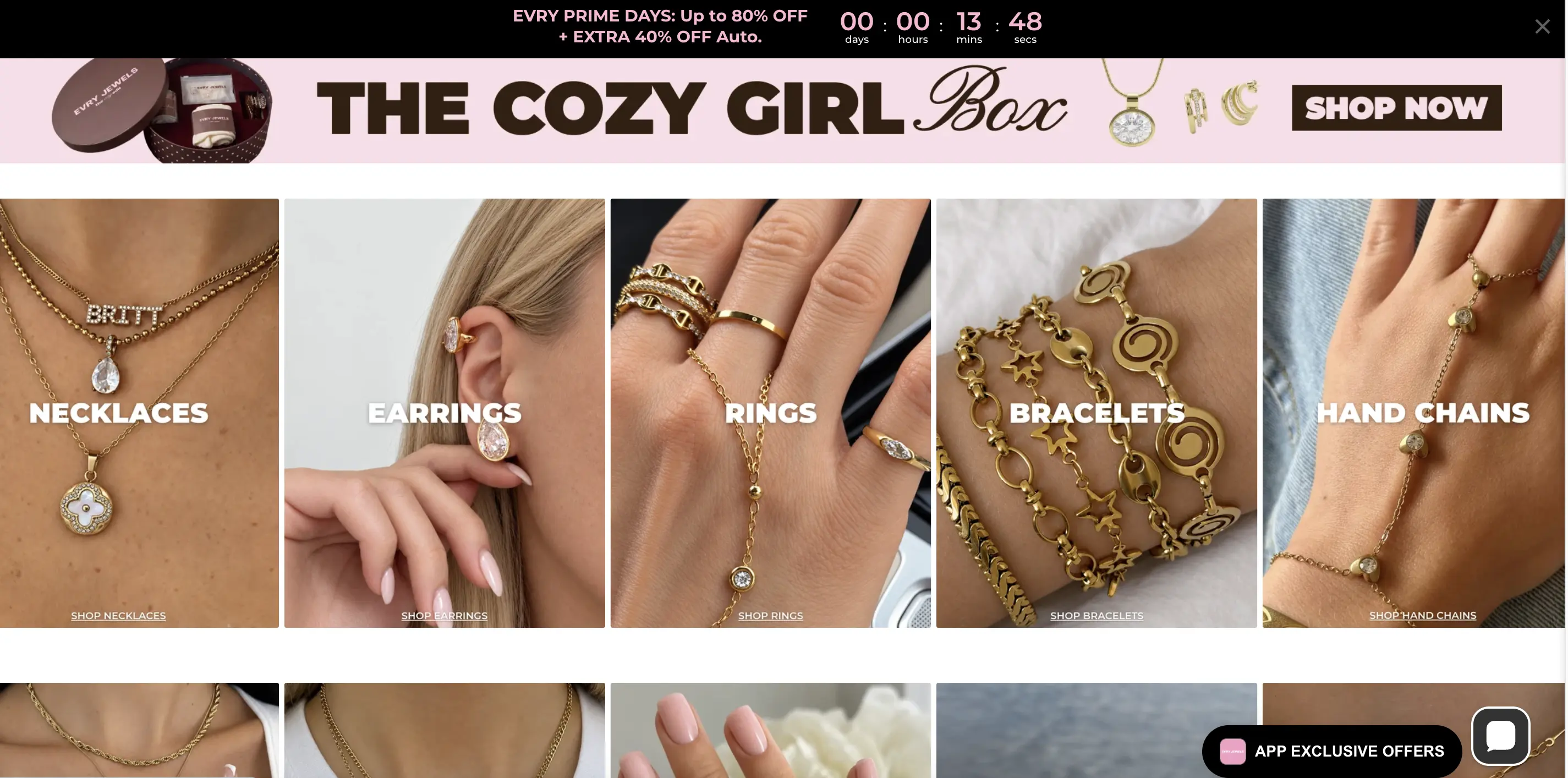
Evry Jewels homepage screenshot
Evry Jewels represents a very different model from heritage or high-ticket fine jewelry. The store is campaign-heavy, youth-oriented, promotion-forward, and designed around frequent reasons to buy now. That approach makes sense because the price point and audience can support high promotional frequency in a way that may not fit a luxury brand.
What they do: Let offer strategy follow the brand and price point.
Why it works: A promotion that increases conversion for affordable fashion jewelry can reduce perceived exclusivity for premium jewelry.
What you can copy: Choose BOGO, multi-buy, free gifts, drops, and sale frequency based on customer expectations and margin structure—not because competitors use them.
Business impact: More coherent promotions and less risk of damaging brand perception.