Is Shopify’s Built-In AI Enough?
Start with the question most merchants actually have: Do you need any of these apps if Shopify already ships its own AI?
Shopify Magic is a suite of AI features built into Shopify. It helps with product descriptions, email copy, store content, and other writing tasks. Sidekick is Shopify’s AI commerce assistant: it answers questions, helps with store tasks, and uses your store’s context to support decisions inside the admin.
For many new stores, that’s genuinely enough at the beginning.
Magic and Sidekick are enough if you’re pre-launch or early stage, you need product copy and basic admin help, and your support volume is still a few emails a week.
You’ll outgrow them when you need customer-facing automation, revenue mechanics like bundles and post-purchase offers, serious page building, loyalty logic, pricing intelligence, deep analytics, or workflows that connect email, SMS, support, ads, and search. Built-in AI is a strong starting point. Growing stores eventually need specialists.
The rest of this guide is ordered by how fast each category typically pays back for a live store: the free baseline first, then sales and AOV, then content and setup, marketing, support, and optimization.
The Free Baseline
1. Shopify Magic + Sidekick
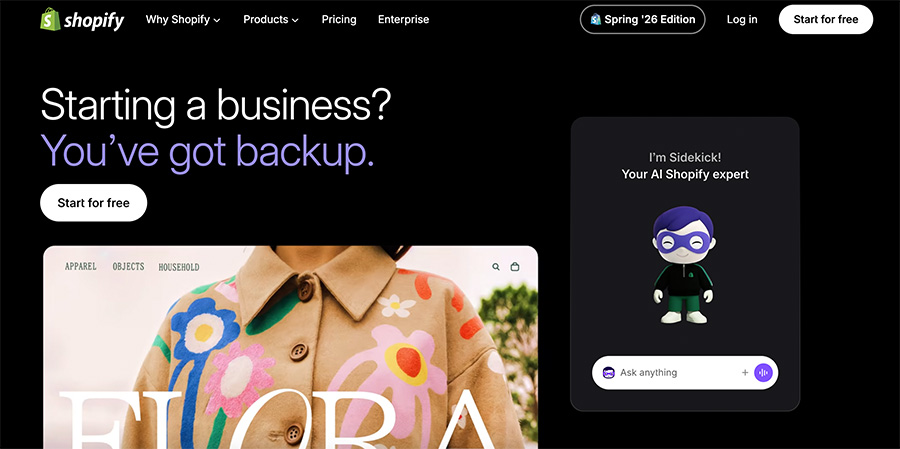
The first AI most merchants should touch is because it’s native and already fits the admin workflow. Magic handles content generation across Shopify. Sidekick works more like an assistant for your store: it answers questions, guides tasks, and supports decisions with your own store context.
Pros: native to Shopify, zero setup, genuinely helpful for product copy and admin tasks.
Cons: it won’t replace a real support AI, page builder, bundling app, email platform, pricing tool, or analytics system.
Pricing: included with Shopify.
Best for: every merchant, especially new stores.
Sales and AOV
If your store is already live, start here. These tools pull more revenue from the traffic and customers you already have, which is why this category usually pays back first.
2. Fast Bundle
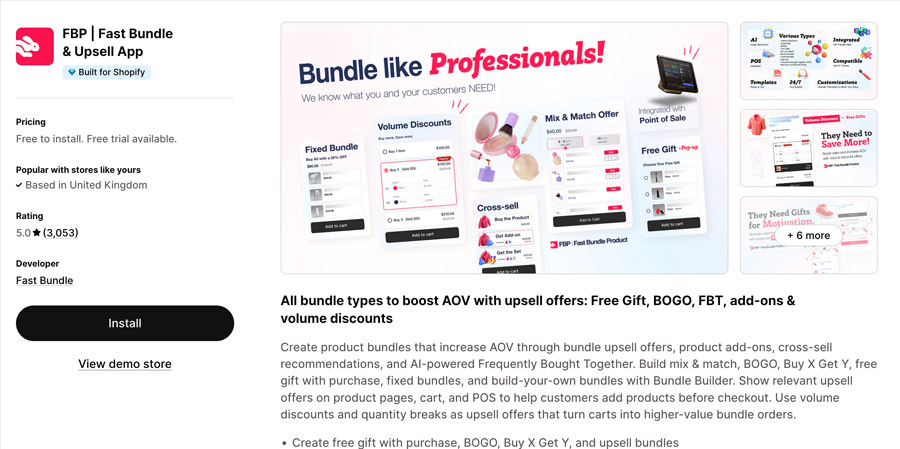
Fast Bundle is a bundling-first Shopify app built to increase average order value. It turns individual products into structured offers that nudge customers to buy more in one order: Mix and Match bundles, volume discounts, BOGO / Buy X Get Y, Free Gift with Purchase, product add-ons, cross-sells, and AI-powered Frequently Bought Together recommendations that learn from your store’s real buying patterns.
Two things round it out. The AI Bundle Image Generator creates bundle visuals so you’re not designing every offer by hand. And for stores that sell in person too, it supports Shopify POS.
Pros: covers every major bundle and discount strategy in one system, AI-powered Frequently Bought Together, automated bundle imagery, Shopify POS support, 5.0 rating across 3050+ reviews.
Cons: Bundling works best when your catalog has natural product pairings. Single-product stores will get less from it.
Pricing: free to install for development stores; paid plans from $19/month, based on monthly revenue generated through Fast Bundle offers.
Best for: merchants who want higher AOV through bundling, add-ons, cross-sells, and AI recommendations.
3. ReConvert
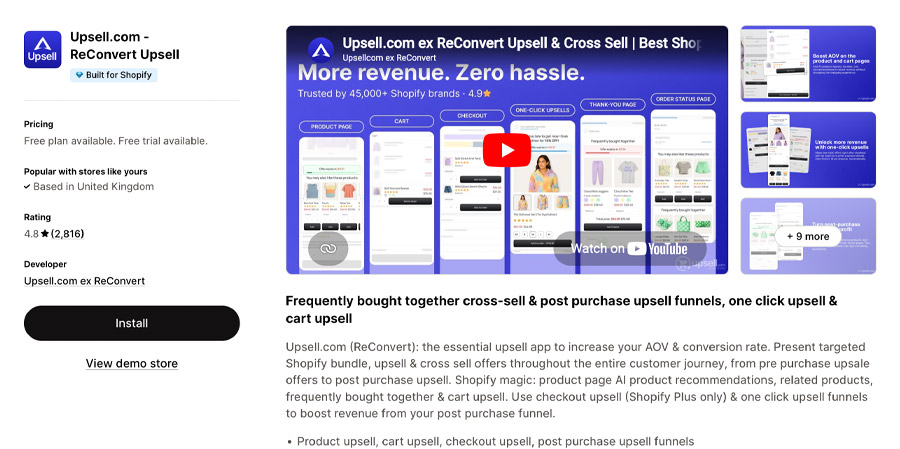
ReConvert builds post-purchase upsells and thank-you page offers. Its trick is timing: the offer appears after checkout, when the first purchase is already locked in, so it does not interrupt the original checkout conversion.
That makes it a natural partner to bundling rather than a competitor. Fast Bundle lifts AOV before and during the shopping journey; ReConvert adds revenue after it.
Pros: revenue from orders you’ve already won, cheap entry point, 4.8 rating across roughly 2,800 reviews.
Cons: It optimizes one moment in the journey, so it won’t replace a full bundling or personalization strategy.
Pricing: free plan; paid from $4.99/month.
Best for: merchants who want more from every completed order.
Store Setup and Content
4. Fudge AI Page Builder + Editor
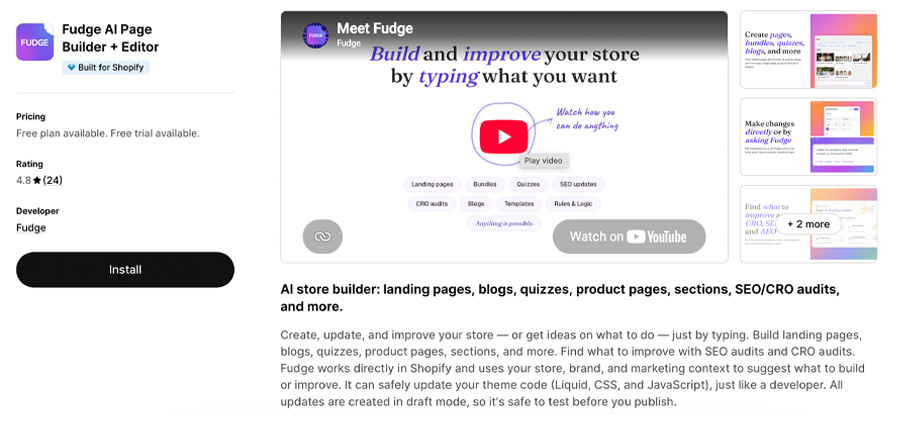
Fudge is the newest idea on this list: prompt-based store editing. Instead of dragging blocks, you describe what you want, and Fudge creates or edits pages, sections, blogs, quizzes, and storefront elements. Changes wait in draft for your review before anything goes live, which keeps you in control.
It shines for campaign pages, SEO and AEO updates, and the small storefront edits that usually sit in a developer’s queue for a week. The honest caveat: it’s still young, with a 4.8 rating across just 24 reviews at the time of our check. Promising, not yet proven.
Pros: prompt-based page and store editing, reduces developer dependency, and review-before-publish workflow.
Cons: less suited for merchants who want a traditional drag-and-drop builder, since Fudge is mainly built around prompt-based store editing and AI-generated changes.
Pricing: free plan available; check the live listing for paid tiers.
Best for: teams comfortable adopting a newer AI-native tool early.
5. Instant AI Page Builder

Instant helps Shopify merchants create pages and sections faster without relying heavily on design or development resources. Its practical AI features support the content work merchants often need for everyday store updates, including SEO titles and meta descriptions, image alt text for accessibility, product descriptions, hero text, and other page copy.
This makes Instant useful for campaign pages, product launches, collection updates, and recurring content improvements where speed matters. It is a good fit for merchants who want to publish clean Shopify pages and sections faster, without needing full developer support for every change.
Pros: fast page and section creation, practical AI features for SEO, accessibility, and product copy, useful for non-technical teams.
Cons: less granular than a deep visual builder if you want full design control.
Pricing: check the live listing for current plans.
Best for: merchants who want good pages and sections shipped fast.
6. GemPages
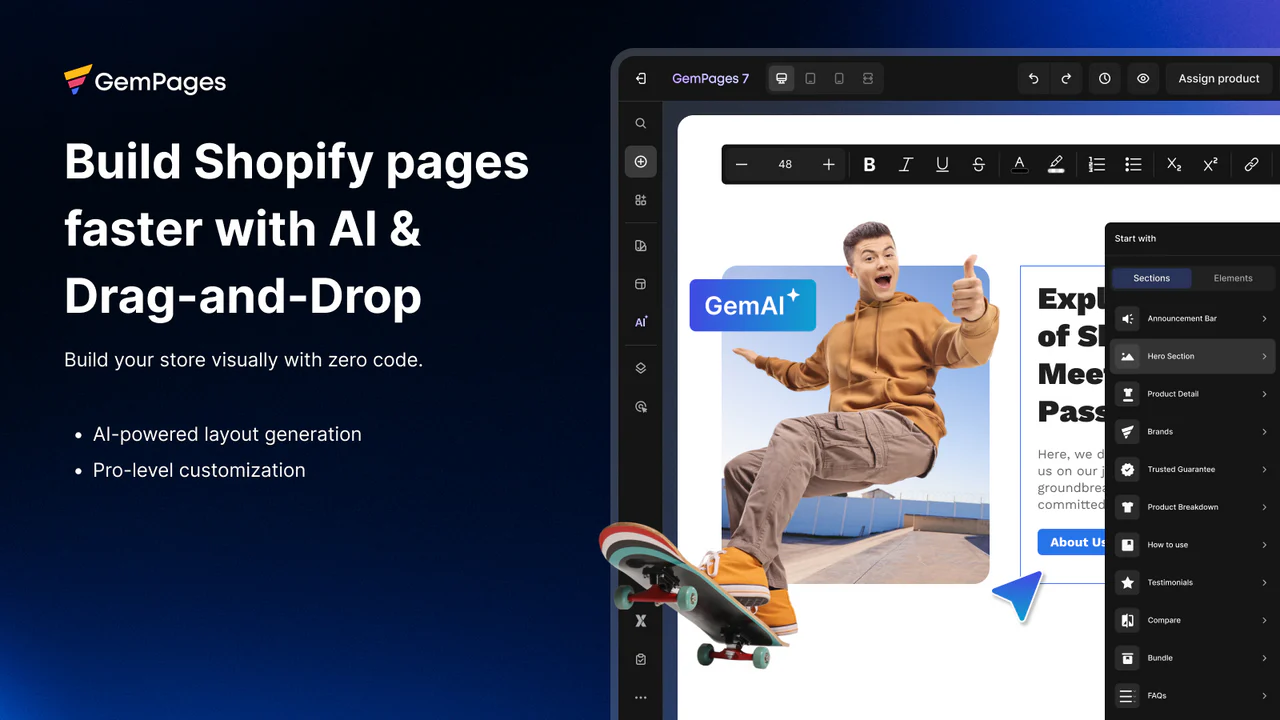
GemPages pairs AI-assisted page creation with a full visual editor. Homepages, landing pages, product pages, collections, advertorials, campaign pages, all without code, and all with real control over layout and conversion structure.
It earns its spot by being more established than most AI page tools in the ecosystem: a 4.9 rating across roughly 4,500 reviews.
Pros: proven page builder, strong visual editing, flexible templates for campaign and sales pages.
Cons: Like any page builder, it adds weight if you keep stacking sections without watching performance.
Pricing: free plan; paid from $29/month.
Best for: merchants who need landing pages with full visual control.
If it doesn’t fit: Instant for speed, Fudge AI for prompt-based editing.
7. SEOWILL: AI SEO & AI Blog Post

SEOWILL is an AI SEO app for Shopify merchants who want help with store audits, on-page SEO, metadata, alt text, AI blog content, structured data, and AI search visibility. It is more than a product description generator, which makes it a stronger fit for stores that want to improve both traditional SEO and AI-driven discovery.
Its AI features can help identify SEO issues, suggest fixes, generate SEO blog content, optimize meta tags and alt text, and make store content easier for search engines and AI systems to understand.
Pros: broader SEO coverage than a basic AI copywriting app, includes AI blog creation, SEO checks, metadata, alt text, structured data, and llms.txt support.
Cons: It may be more than very small stores need if they only want product descriptions.
Pricing: free plan available. Check the live listing for current paid tiers.
Best for: Shopify merchants who want an AI SEO app for content, technical SEO, and AI search visibility.
8. Canva

Canva isn’t a Shopify-native app, but for small teams without a designer, it’s often the fastest route to usable creative. Its AI tools turn a prompt into banners, ads, product graphics, social posts, email visuals, and seasonal campaign assets.
Pros: easy for non-designers, huge template library, output works across ads, email, product pages, and social.
Cons: It’s a design tool that connects to ecommerce workflows, not a store editor. Bundle-specific imagery is automated better inside Shopify (see #2).
Pricing: free plan; paid tiers vary by Canva plan.
Best for: merchants who need fast visuals without a design team.
Marketing
9. Klaviyo

Klaviyo is one of the most widely used email and SMS platforms among Shopify brands, and its AI has real depth: predictive analytics for churn risk and next-order date, AI-generated segments, subject line testing, and product recommendations, all fed by your Shopify customer, product, and order data.
Pros: deepest Shopify data connection in its category, 4.7 rating across roughly 2,900 reviews, predictive features that improve as order history grows.
Cons: costs scale with your contact list, so list hygiene isn’t optional.
Pricing: free tier; paid scales with contacts and usage.
Best for: retention marketing once your store has customer history to learn from.
10. Semrush

Semrush is the established platform for keyword research, competitor analysis, and content planning, with a 2026 twist that matters: AI visibility tracking. Ecommerce visibility is no longer just Google rankings. You also need to know how your brand shows up in AI answers and AI shopping experiences, and Semrush is built to monitor exactly that.
Pros: covers classic SEO and the new AI-answer channel in one place, with deep competitive data.
Cons: a professional tool with professional pricing, so probably more than a brand-new store needs.
Pricing: paid SaaS plans; trial availability changes.
Best for: merchants treating organic search and AI visibility as growth channels.
11. TinyIMG

Semrush tells you what to fix. TinyIMG fixes it inside your store. It started as an image optimizer and grew into a full-on-store technical SEO app: alt text, metadata, structured data, broken link detection, and speed improvements, all without touching code.
Pros: 5.0 rating across roughly 2,400 merchants, covers speed and technical SEO in one subscription, genuinely usable free plan.
Cons: It optimizes the pages you have. Keyword strategy and content planning still need a tool like Semrush.
Pricing: free plan; paid from $14/month, scaling with catalog size.
Best for: stores that want technical SEO and image work handled with near-zero developer time.
Customer Support and Trust
12. Tidio

Tidio combines live chat, a lightweight helpdesk, and its Lyro AI agent, which answers common questions about orders, shipping, and returns, then hands the complicated stuff to your team. For most small teams, it’s the shortest path to AI support without building out a full helpdesk.
Pros: quick setup, handles the repetitive majority of questions, works well for lean teams, 4.8 rating across roughly 1,270 reviews.
Cons: The AI is only as good as the policies, product info, and FAQ content you feed it before going live.
Pricing: free plan; paid AI plans priced separately, so check current terms.
Best for: small teams drowning in repeat questions.
If it doesn’t fit: Gorgias, once volume and channel complexity grow.
13. Gorgias

Gorgias is the helpdesk built for ecommerce and DTC brands. Its AI Agent automates replies using customer context, order data, policies, and past ticket patterns, and it can take actions like editing orders, not just answering. For stores with serious volume, it centralizes email, chat, and social in one place with Shopify order context attached.
Pros: deep Shopify actions inside tickets, unifies every support channel, AI trained on your own history.
Cons: its rating has drifted to 4.2 across roughly 650 reviews, and per-ticket costs need watching as volume grows. More system than a small store needs.
Pricing: from $10/month for 50 tickets; check current ticket limits and usage rules before installing.
Best for: established brands with real ticket volume across channels.
If it doesn’t fit: Tidio is the simpler starting point.
14. Loox

Loox is a Shopify reviews and social proof app that helps merchants collect and display product reviews, photo reviews, video reviews, and referrals across the shopping journey. Its AI features, including AI Sorting, AI Highlights, AI Translations, and AI Replies, help merchants organize review content, surface useful customer feedback, respond faster, and make reviews easier for shoppers to scan. For stores that rely on trust signals and visual proof to improve conversion, Loox is a stronger AI-focused fit than a basic review collection app.
Pros: strong fit for visual social proof, supports photo and video reviews, includes practical AI features for sorting, highlighting, translating, and replying to reviews.
Cons: more focused on reviews and social proof than full customer marketing. Stores that need reviews, loyalty, referrals, surveys, and quizzes in one platform may prefer Okendo.
Pricing: free plan available. Check the live listing for current paid tiers.
Best for: stores that want AI-supported reviews, visual social proof, and stronger trust signals on product pages.
Optimization and Analytics
15. LoyaltyLion
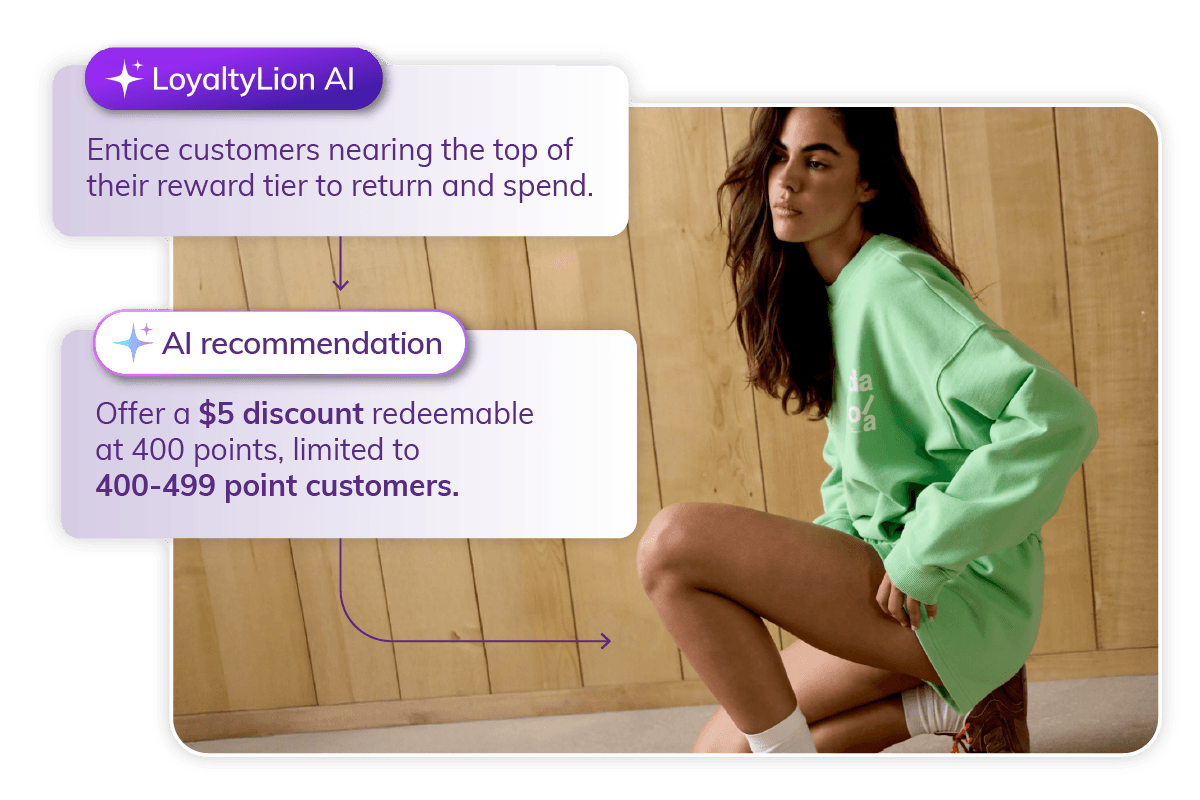
LoyaltyLion builds loyalty programs with points, rewards, referrals, and VIP tiers, personalized by each shopper’s behavior and purchase history. Loyalty sounds old-fashioned until repeat purchase rates start moving.
One expectation to set: loyalty compounds. It’s not an instant win, so give it a quarter before judging.
Pros: strong retention and repeat-purchase mechanics, 4.6 rating across 500+ reviews, free plan to start.
Cons: not every store needs loyalty early. It pays off in categories where customers naturally buy again.
Pricing: free plan; paid tiers are quote-based, so confirm directly.
Best for: consumables, beauty, food, supplements, pet products, and other repeat-purchase categories.
16. Prisync
Prisync monitors competitor prices and automatically applies dynamic pricing rules. In a price-competitive category, that’s the difference between reacting weekly and reacting hourly.
One rule matters more than the rest: guardrails. Dynamic pricing should never run without margin floors and regular review.
Pros: true automated repricing, 4.9 rating across roughly 220 reviews, clear fit for competitive markets.
Cons: unnecessary for stores that don’t compete on price. No free plan.
Pricing: from $49/month; 14-day trial.
Best for: stores competing on price in crowded categories.
17. Triple Whale

Triple Whale centralizes sales, marketing, attribution, and profitability data, and its Moby AI assistant answers plain-language questions about your numbers. That accessibility is the point: analytics stops being a specialist’s job.
It earns its keep for brands spending across multiple paid channels, where attribution and true profitability are nearly impossible to see from any one platform.
Pros: cross-channel attribution and profit clarity in one place, an AI you can literally ask “which channel actually makes money.”
Cons: garbage in, garbage out. Connect every data source at setup, or the attribution will mislead you.
Pricing: Free plan available. Paid plans start at $149/month, based on the current Shopify App Store listing.
Best for: stores spending across multiple ad channels.